Skip to content
Mayemba Dance Company
FR EN SV
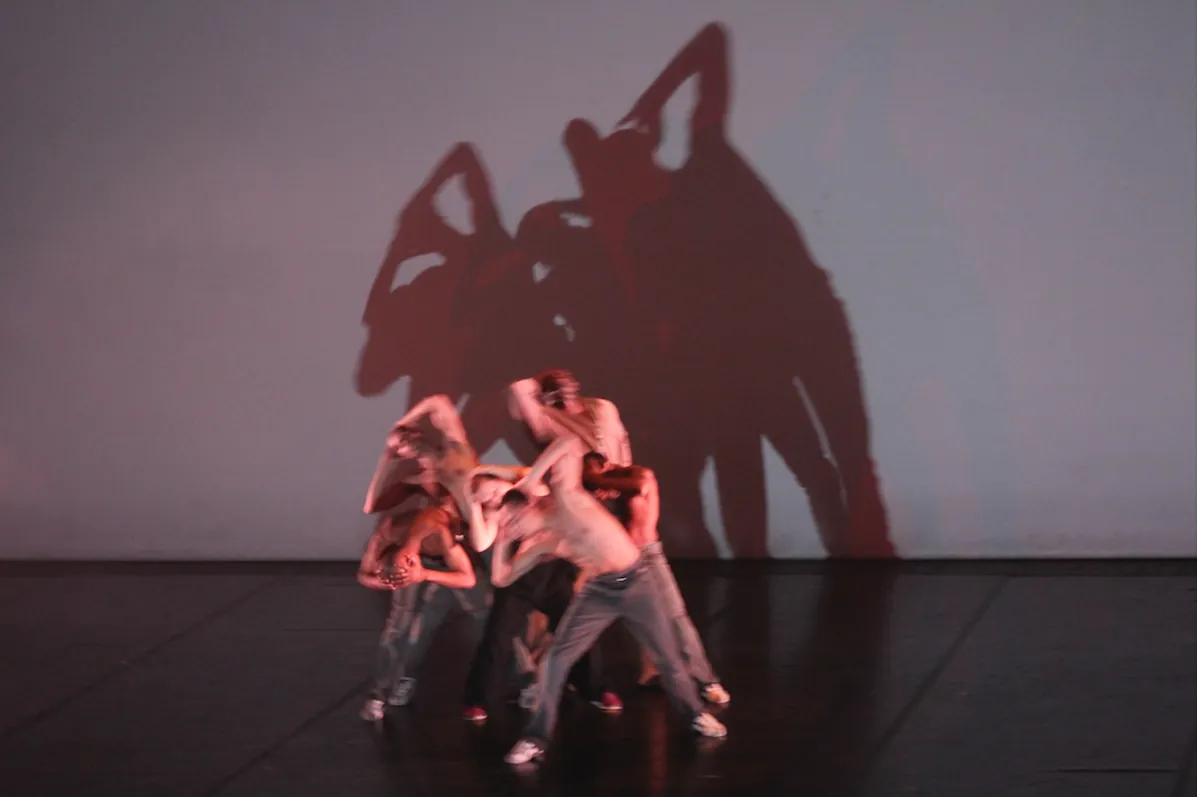
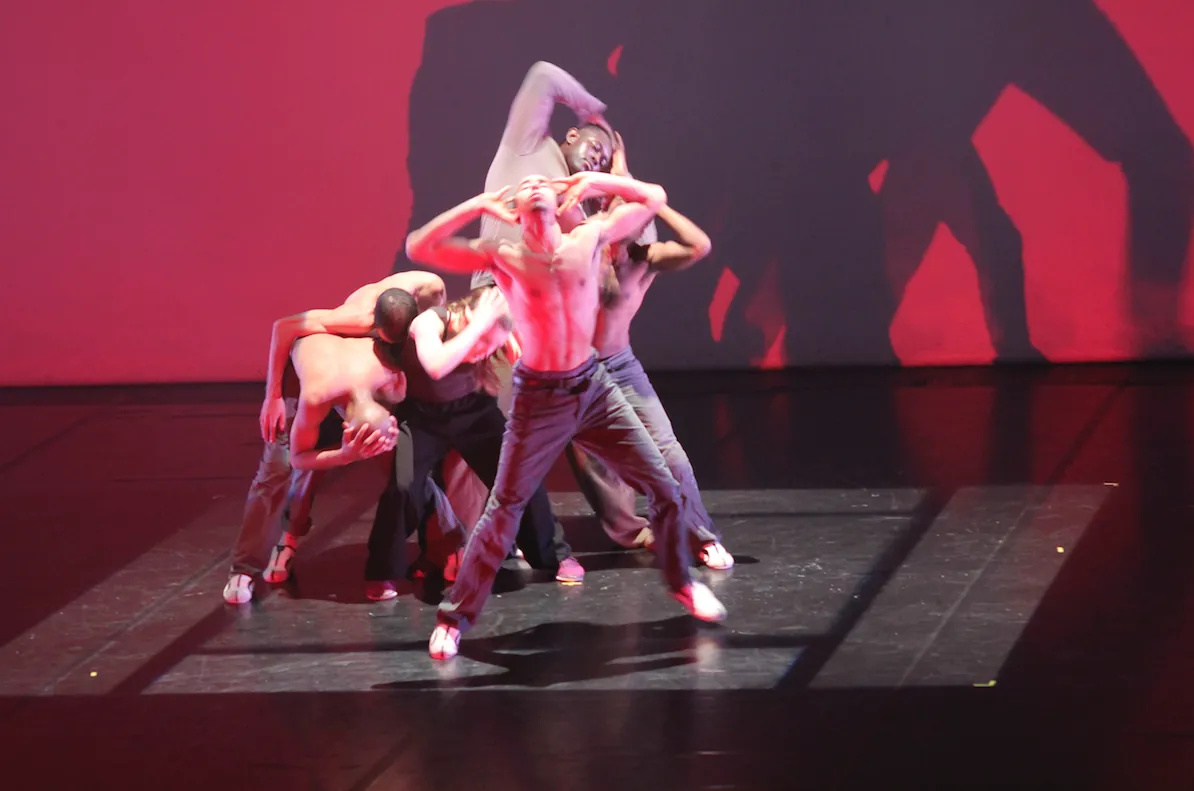
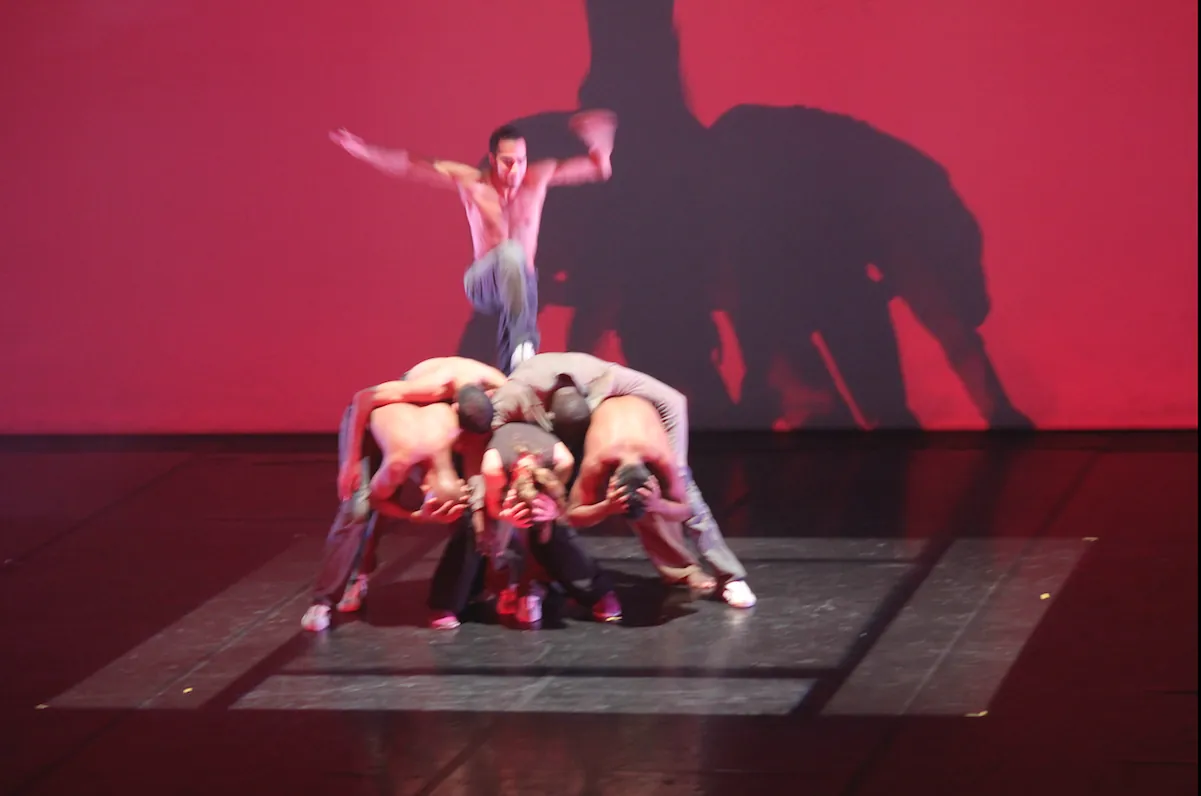
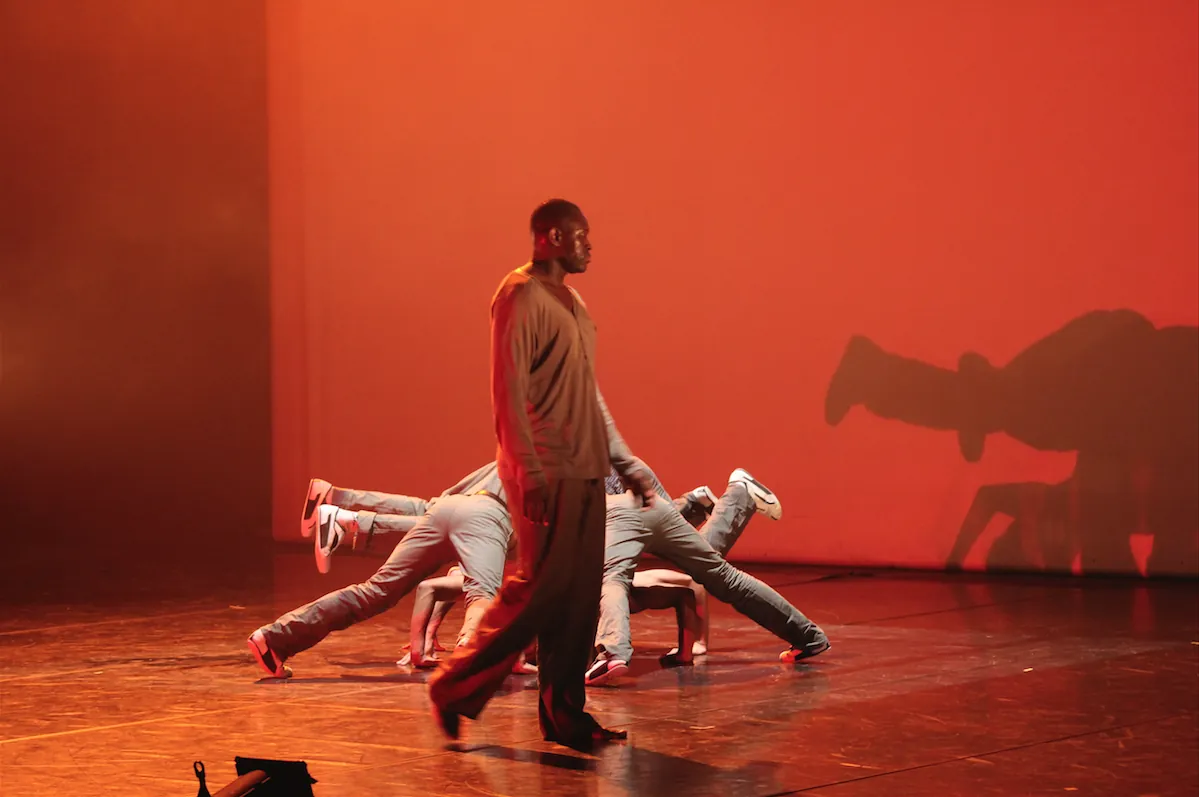
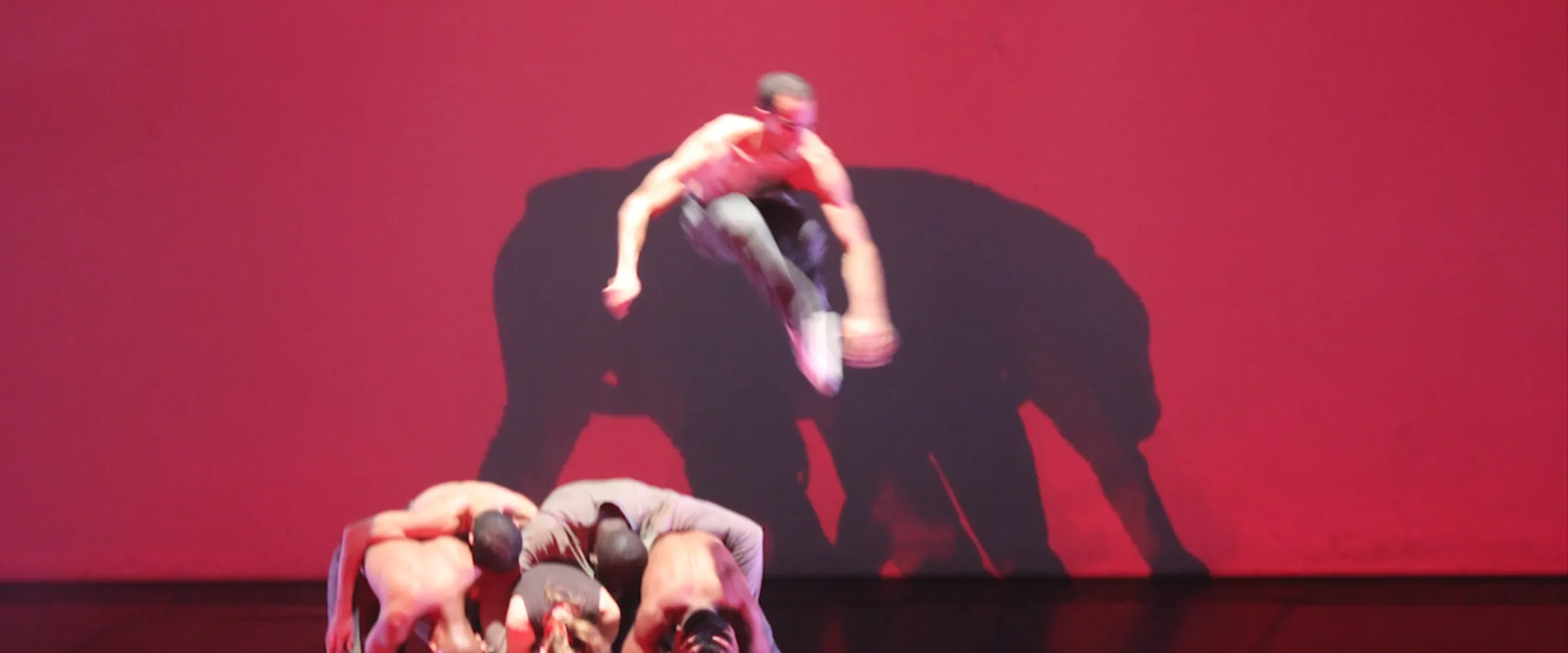
Pays ronds: pyramid of dancers in front of a red backdrop, cast shadows.

Six pieces

Repertoire

The floor-grounding of the break, the vibrations of the body tested by pop and electro, the space and the energy of contemporary dance and Afro-Cuban dance, in equal measure.

01

Utopie

Choreography and music by Didier Mayemba.
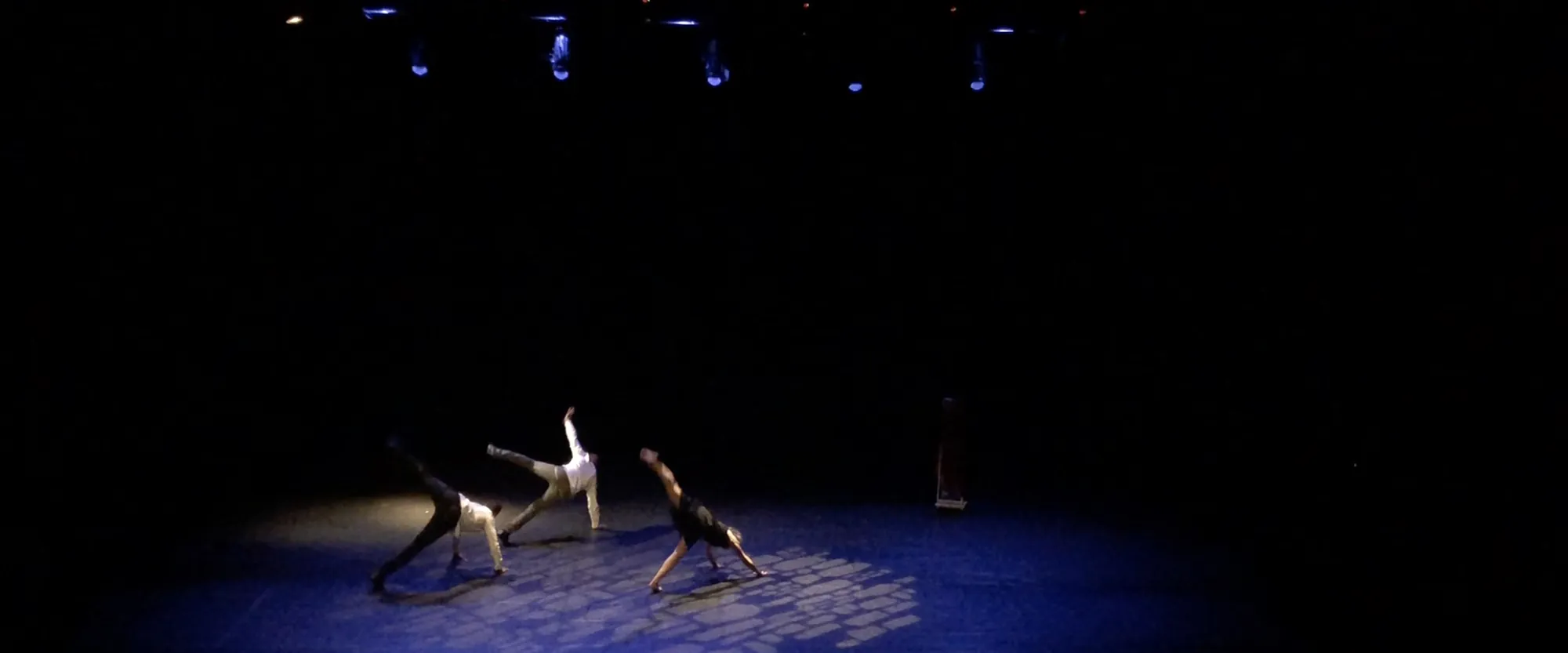
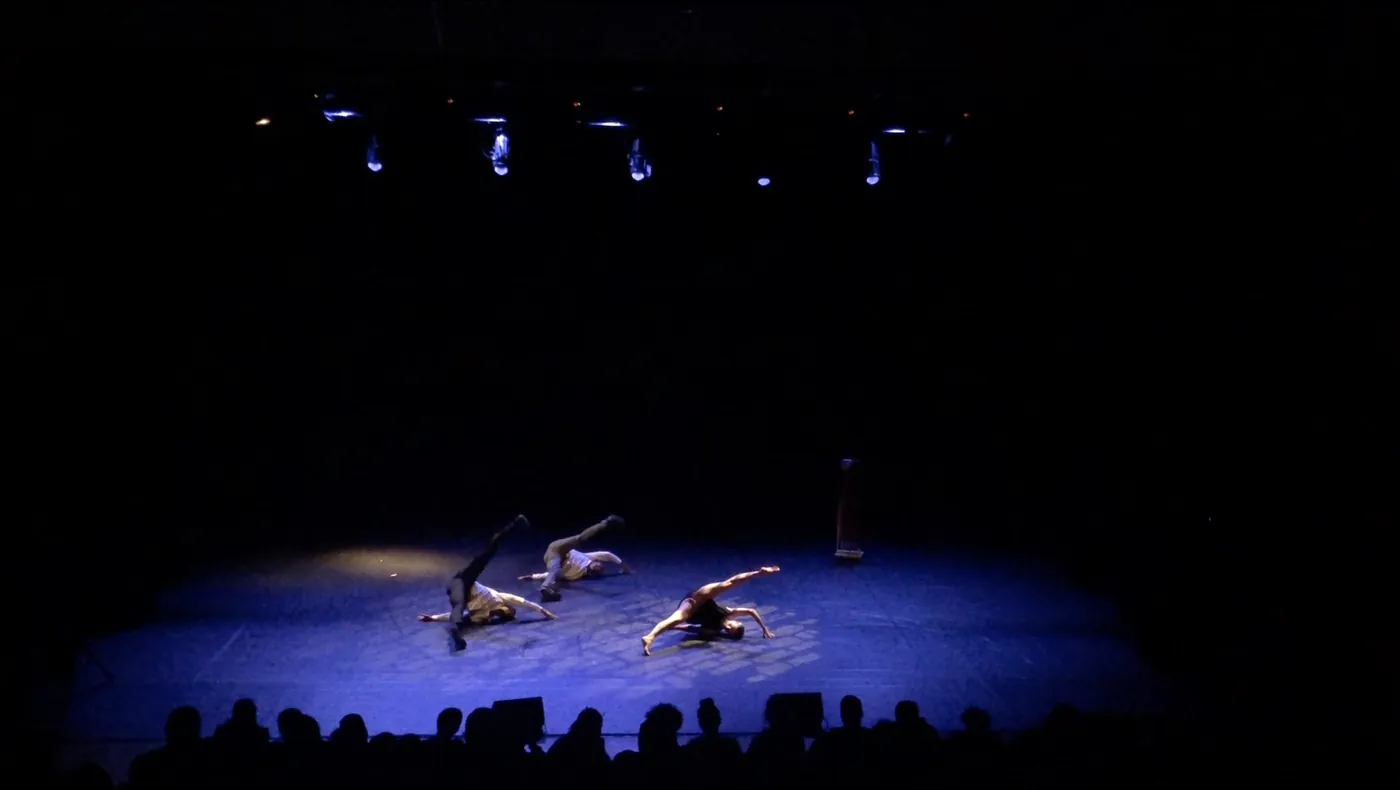
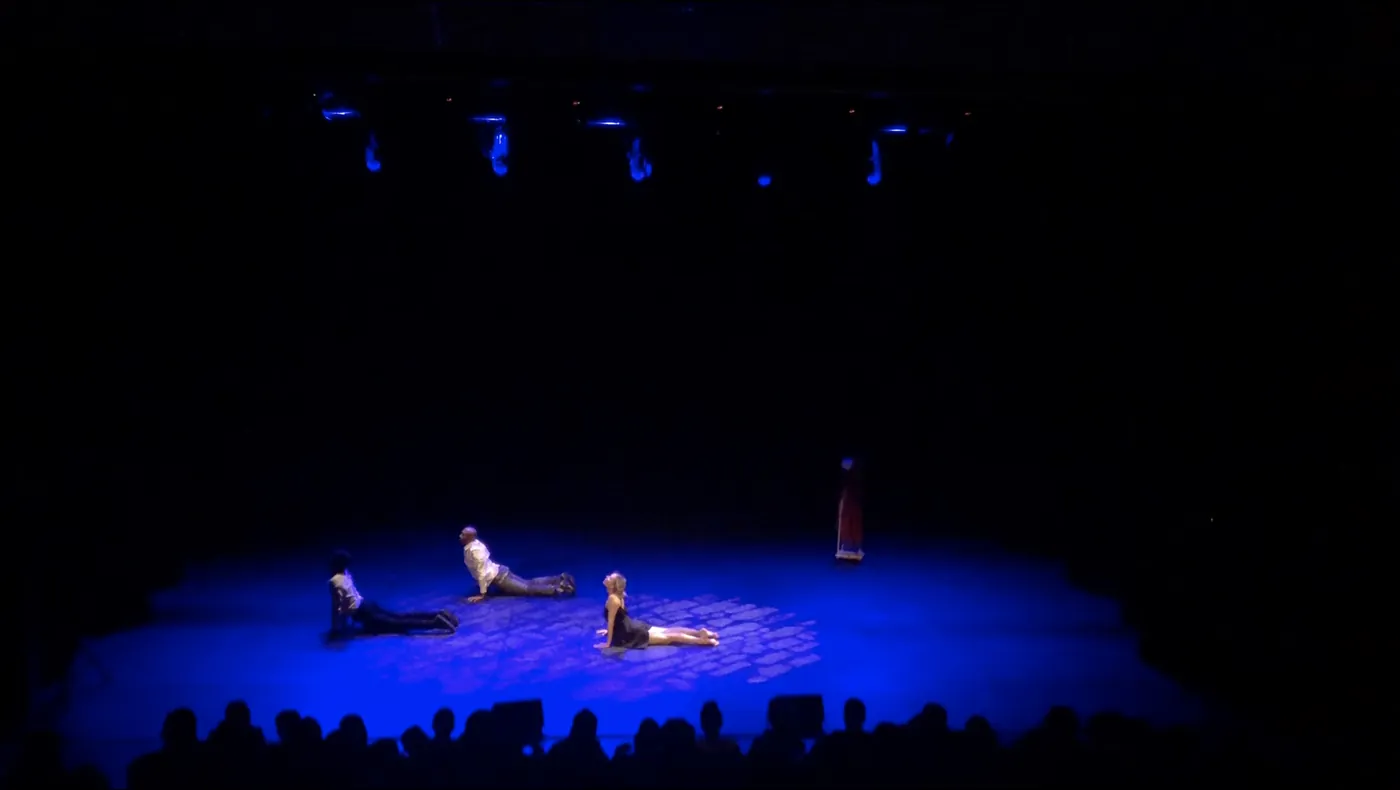
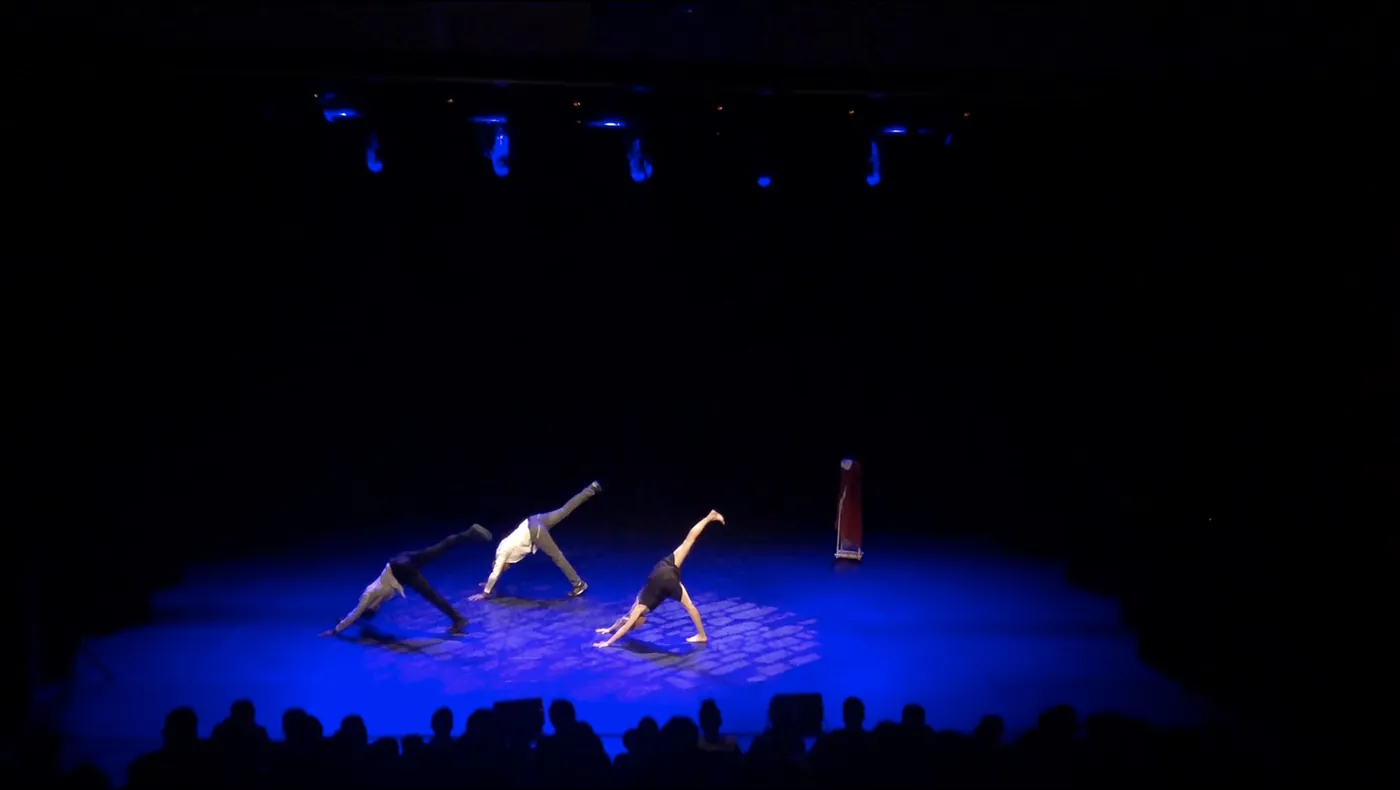
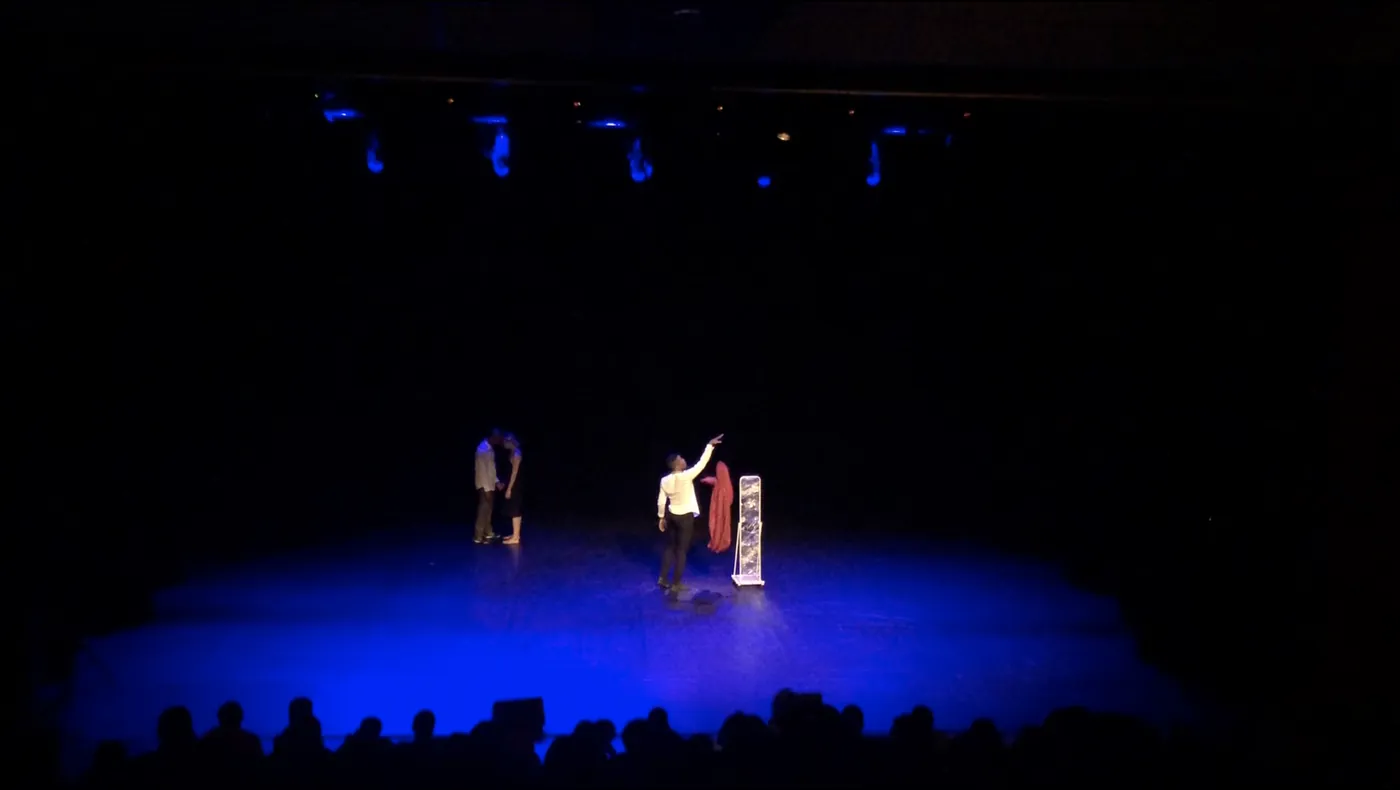
Stage bathed in blue light, the dancers on the floor seen from the back of the auditorium.

The story is that of a utopia : an ideal socio-cultural world where peace, calm, happiness and equality reign for all.

In hip-hop culture, codes — verbal, sartorial, musical — are meant to make everyone the equal of all. Utopie looks at what that promise cost those whose sexual orientation had no place in it, and names the illusion.

The themes the piece addresses are among those subjects that obsess to the point where writing about them can only be the result of a keen emotion. Urgency remains in command of the situation from the very start of the choreographic writing process: certain subjects impose themselves even when the decision to write is still struggling to be made, and so the pen outruns its author.

The creation process

The diversity of the means of expression calls for a process allowing a harmonious dialogue between the performing arts disciplines. Improvisation is one of the main tools of creation:

— improvisation around the text, so that the performers make the material their own using their own words;
— danced improvisations alongside the work on the theme, the narration resting on a mixture of textual and danced scores;
— physical scores proposed by the dancers from the main themes of the story, which evolve over the rehearsals up to the final construction.
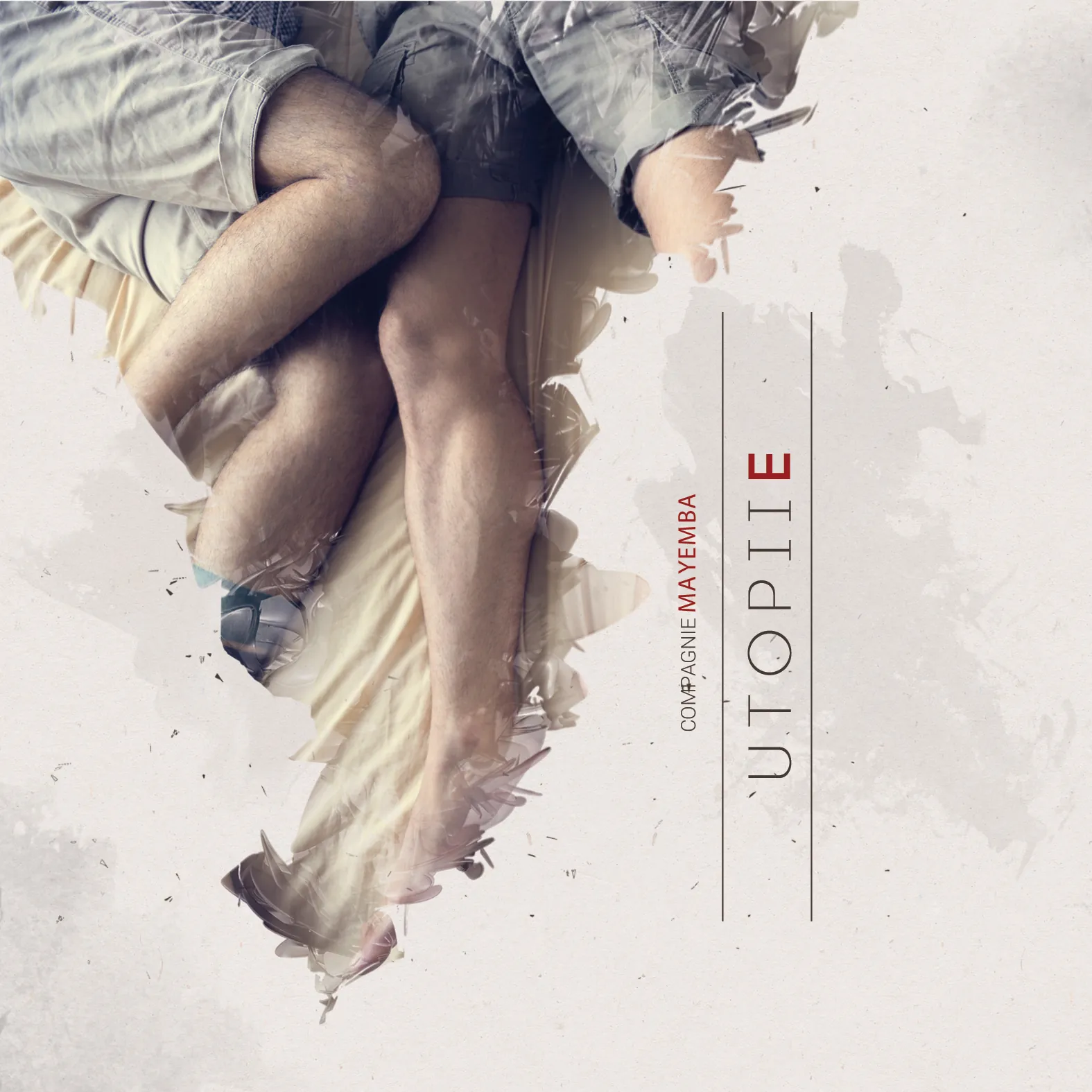
Artwork for the piece Utopie: dancers’ legs entangled, treated as torn paper.
Choreography and music
Didier Mayemba
Performed by
Anita Shmatova, Steeve Marecar, Ursule David
Technical direction
François Kaleka

In the author’s own words

In the virile world I come from — the world of hip-hop culture — we have codes. Verbal, sartorial, musical. They are meant to make us equals, in everyone’s eyes and among all.

Twenty years ago, all of twenty-two years old, I shared this pastime with my friends. I did not yet know that you already could not be a dancer out of hip-hop culture and, on top of that, a Faggot.

Faggot : a homo sapiens inferior to another homo sapiens on account of his sexual orientation, according to certain sapiens from my own culture. Many of my brothers in arms paid a heavy price for that word.

So this culture, which preaches peace and equality, would also be the stage of a world of illusion.

Illusion : feminine noun. A false reading of what one perceives. A mirage — that optical phenomenon able to raise, on the horizon, a sheet of ideal reality, seductive and deceiving.

And yet for a very long time, we had the presumption of being equals among ourselves.

Didier Mayemba — choreographer’s note
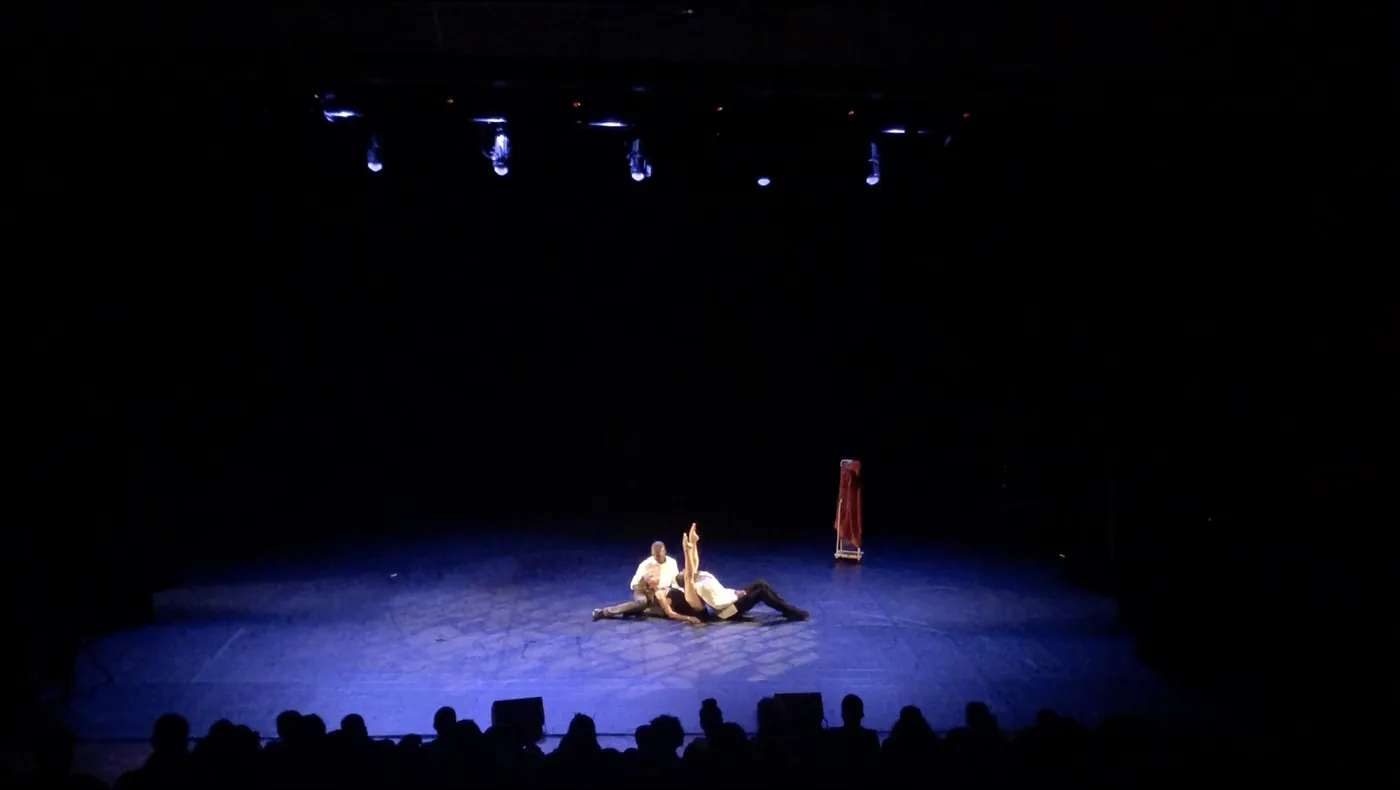
Utopie: two performers on the floor in a blue pool of light, at the centre of a large black stage.
Utopie is above all a work around the ills of the heart. The word perceived as a silent visual movement, like a hidden dance asking only one thing: to appear, to take shape by leaving the field of the text, thus giving life and meaning to the movements of the bodies. Choreographer’s note
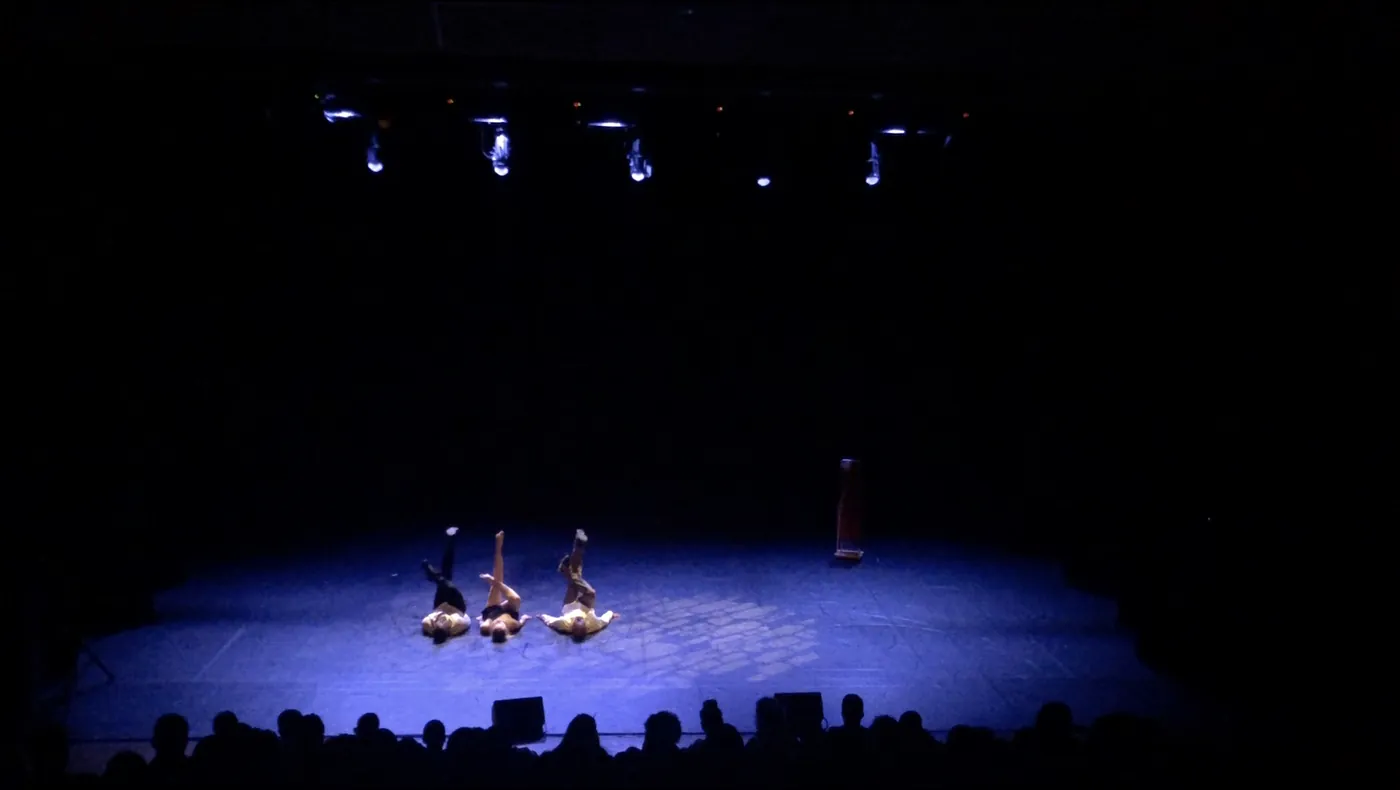
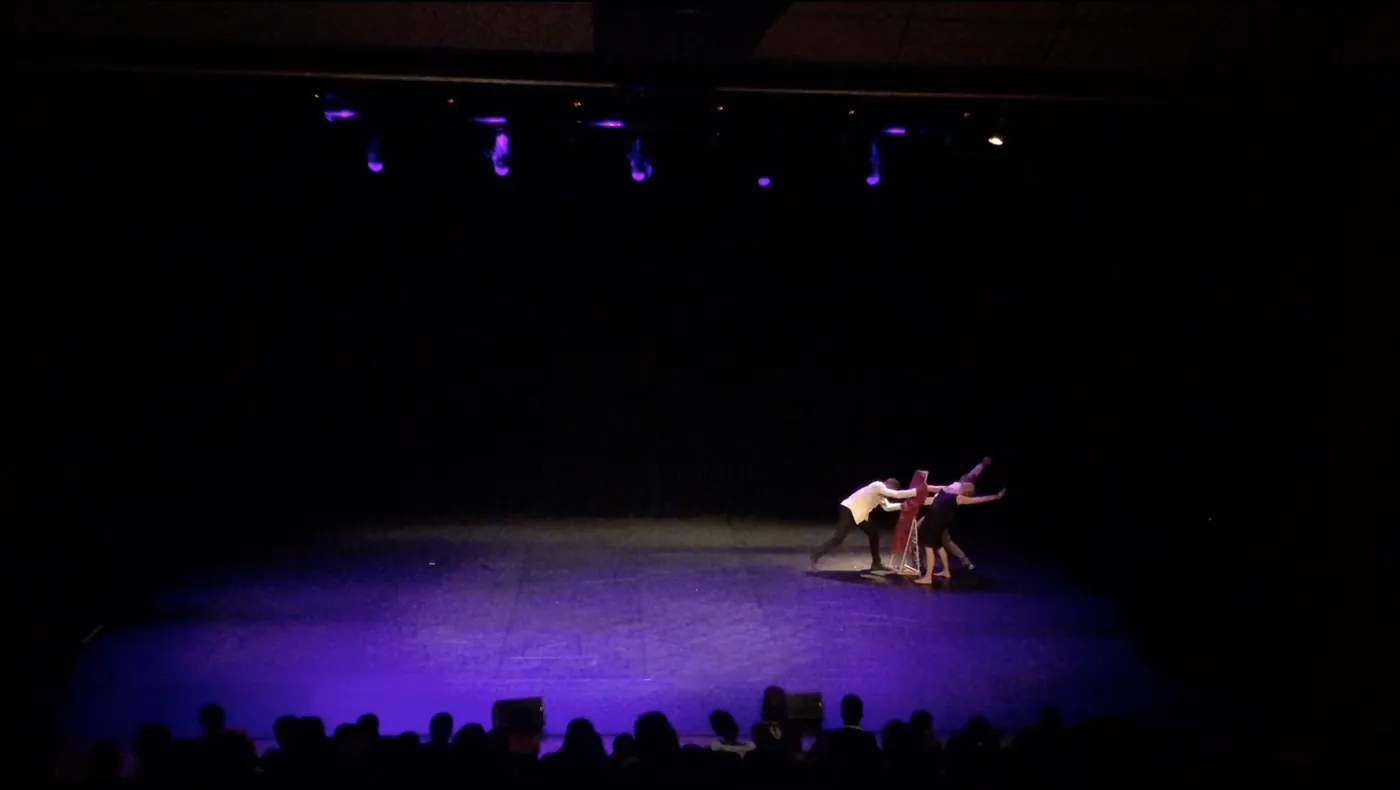
Utopie: two dancers at the centre of a stage lit in blue. Utopie: one dancer on the floor, another standing, raking light. Utopie: dancers lying in the blue halo, audience in the foreground. Utopie: three performers in support, arms outstretched, blue light. Utopie: duo in violet on a stage plunged into darkness. Utopie: two figures standing beside a red block.
02

Nuits d’automne

A piece about love and, above all, about exile.

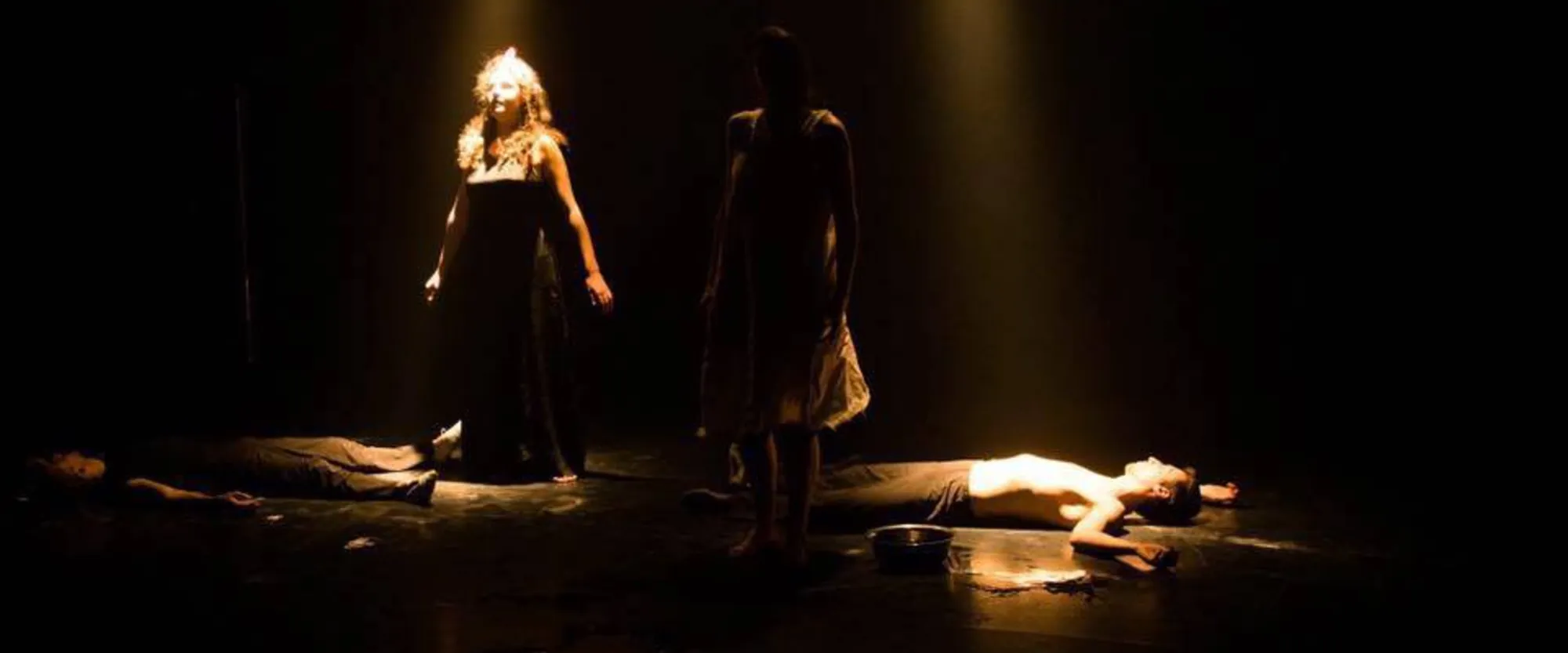
Two performers in a beam of warm light on a dark stage.

The story is that of a woman who decides to shut herself away in a psychiatric hospital after losing her love. Following that admission, the heroine goes through an inner journey, between the imposing presence of the memories of her passionate history, her childhood, and her many attempts to live again without what had long been her reason for living and the dressing on all her wounds.
The heroine’s return to the neighbourhood of her childhood takes the spectator into another space, where the daily life of a country at war is told to her. In this way the heroine’s love story meets the story of a whole country.

The piece questions the link between the exile of love and exile from the land, between the body of the beloved and one’s roots. If love remains a haven of peace, the cradle of the wildest illusions, the land is the original cradle of all dreams, the source of every new life. But the land of childhood is now a space of war, a land that bleeds and no longer shelters the buds of the life of former times. The heroine’s personal exile and her exile in love thus find their echo in collective exile, that of an entire people.

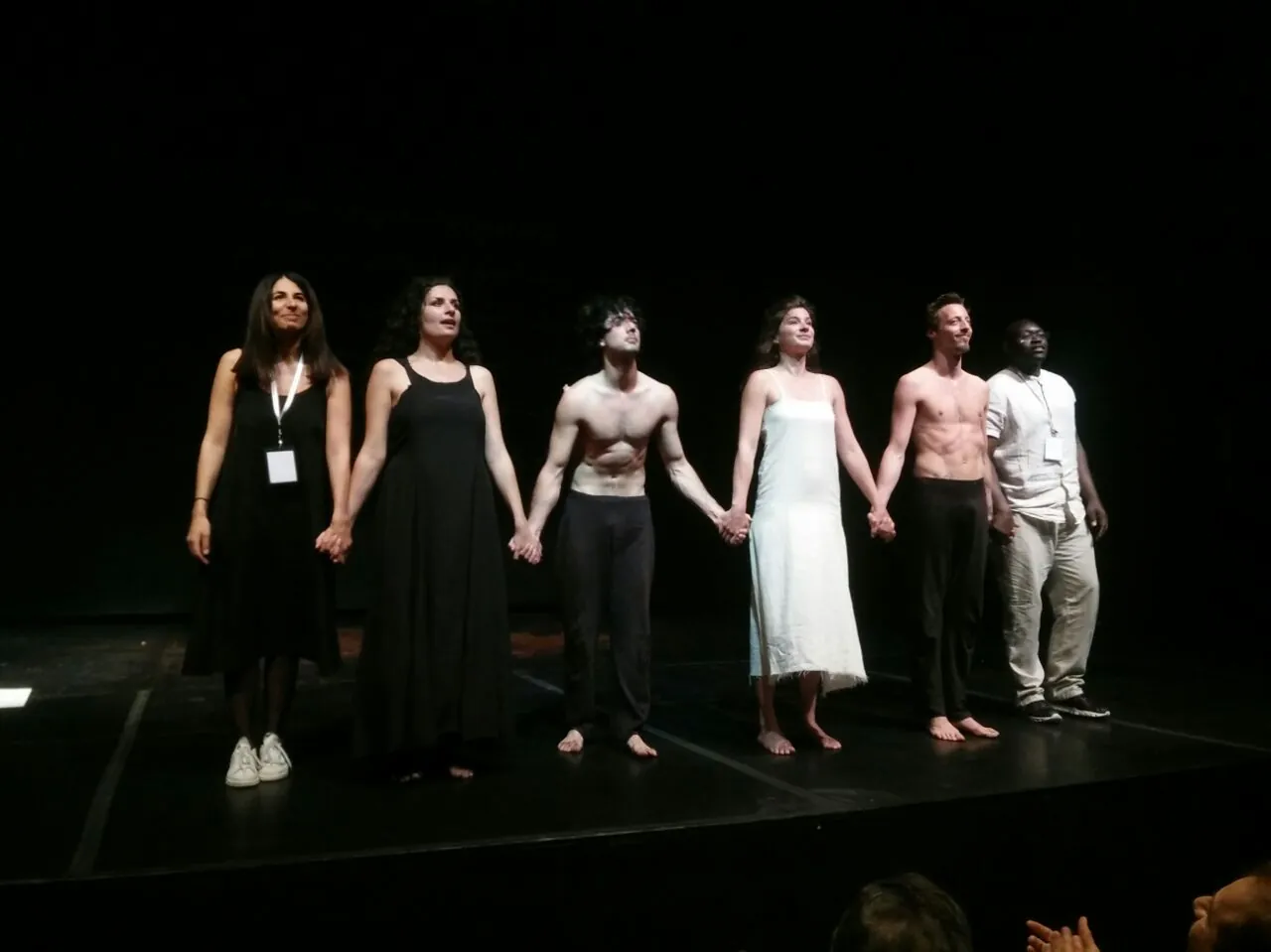
Nuits d’automne: the performers in a line on stage, hand in hand, taking a bow.
Choreography
Didier Mayemba
Statement of intent
Sirine Achkar
Actor-dancers
Annabelle Hanesse, Florence Weber, Cédric Poirot, Danilo Sékic
Lighting design
François Kaleka
Costumes
Lea Gutmann Loffler
Graphic design
Angela Deschamps, Renaud Dobeck
Through Nuits d’automne I tell of my forgiveness, the wounds, the anguish inflicted on the person I was supposed to love and protect in my past. Didier Mayemba
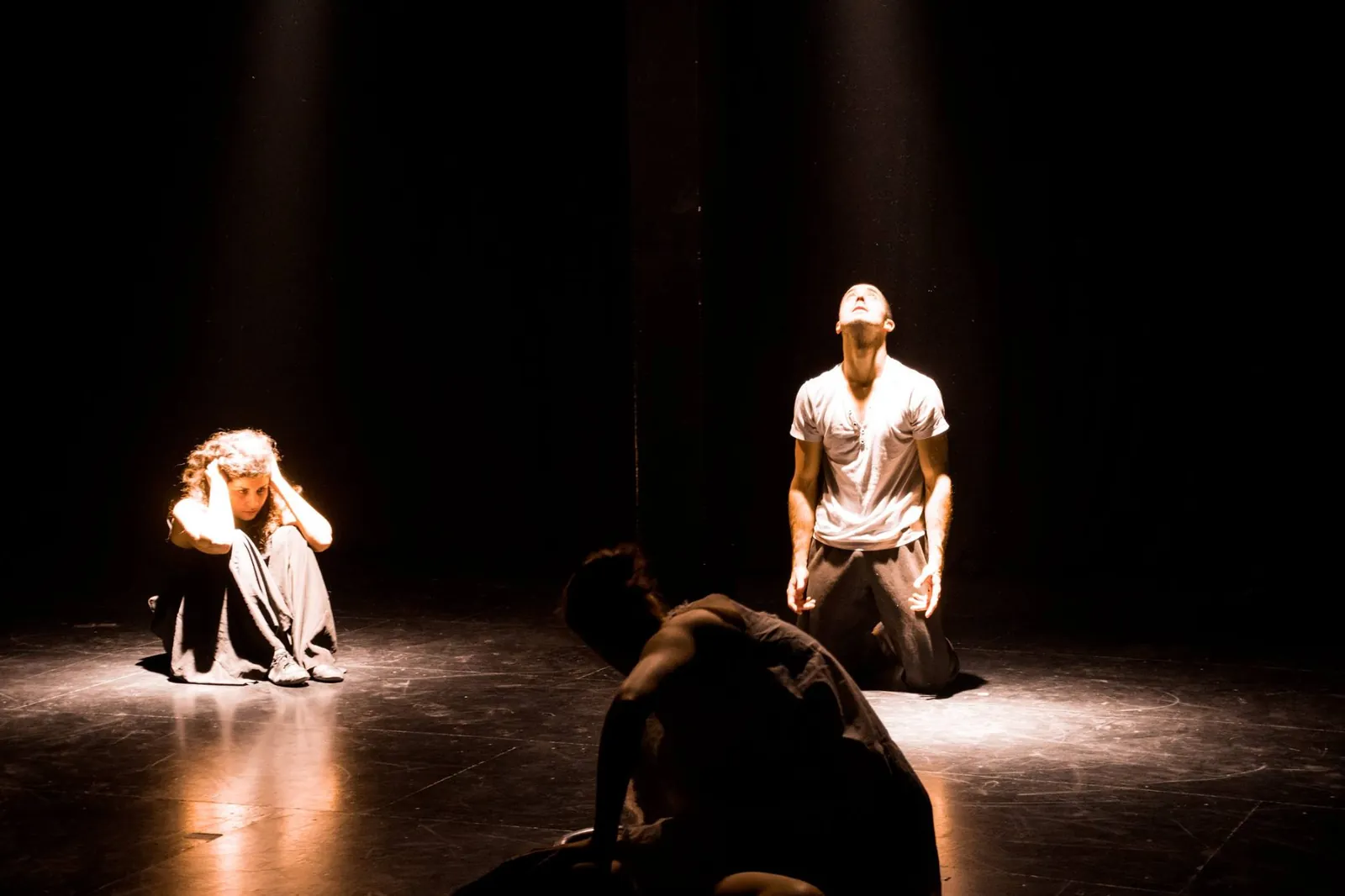
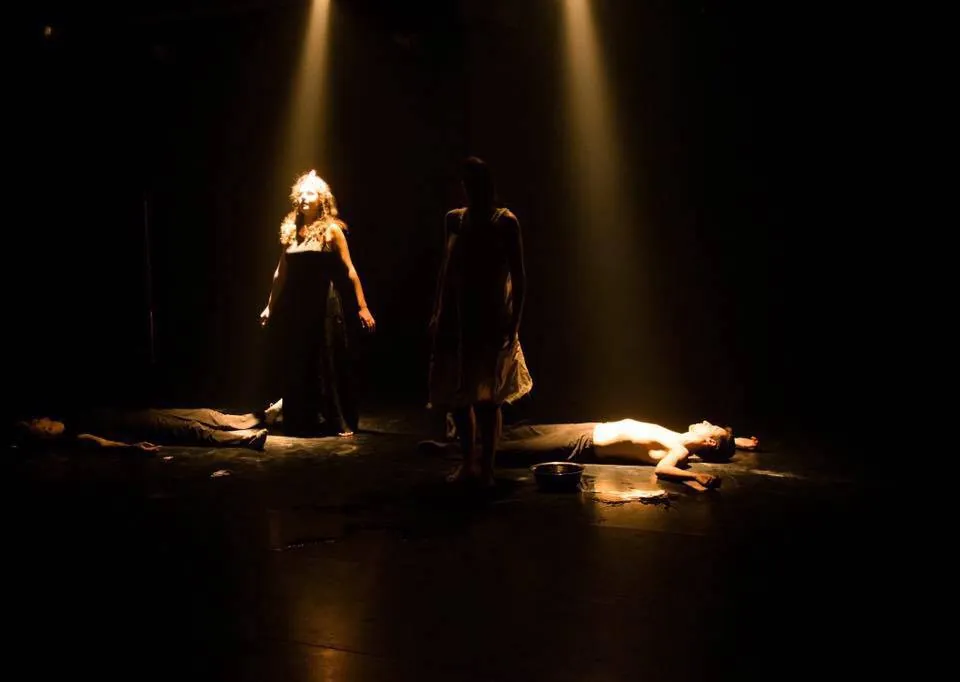
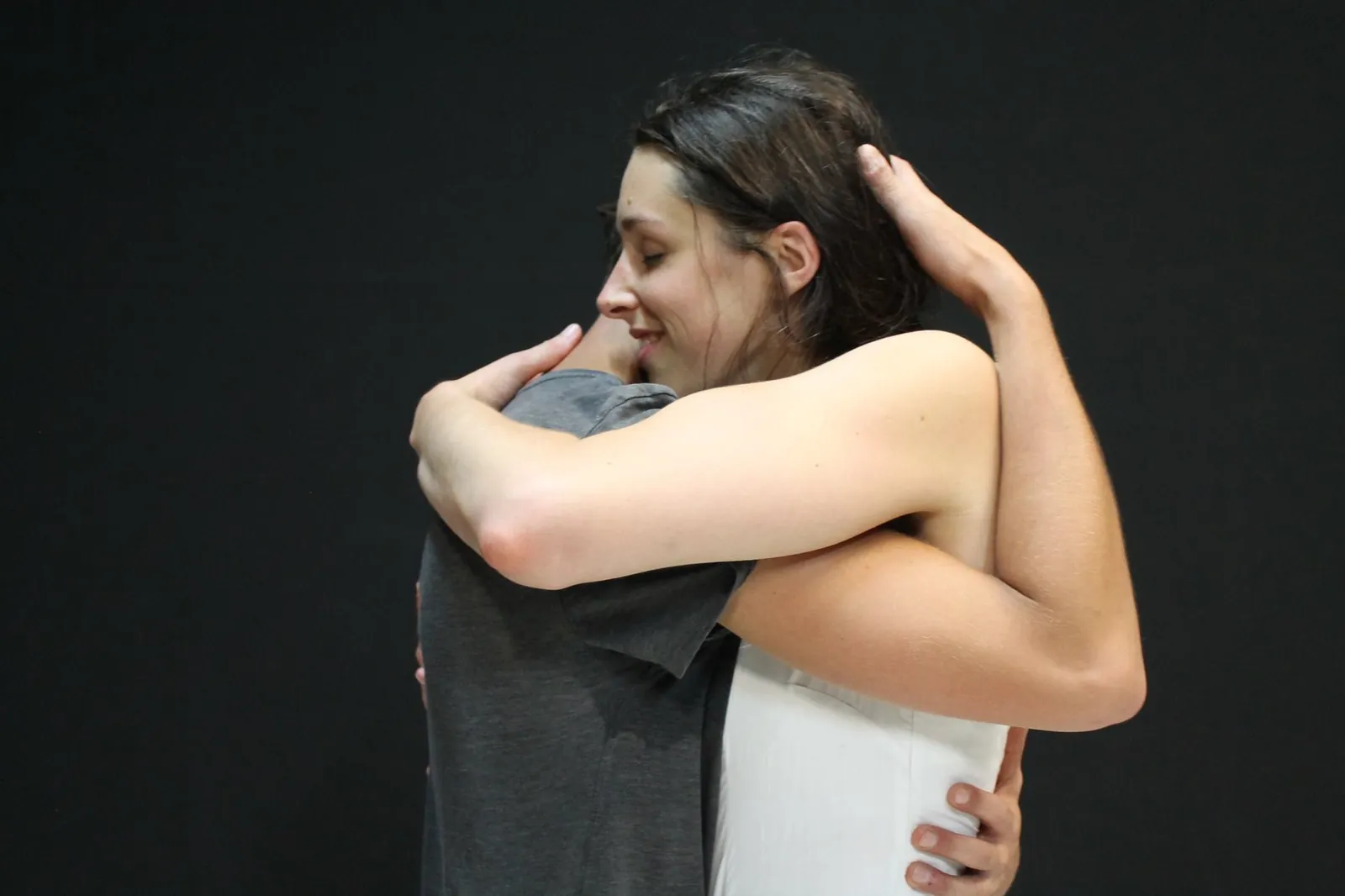
Nuits d’automne: a performer seated, a dancer crouching beside her. Nuits d’automne: a body lying on the stage, raking light. Nuits d’automne: two performers standing in a beam of light, material on the floor. Nuits d’automne: a duo embracing, in the studio.
03

Entre deux mondes

A work inspired by the duality of gentleness and harshness, present at every moment of our lives. Each exists through the other.

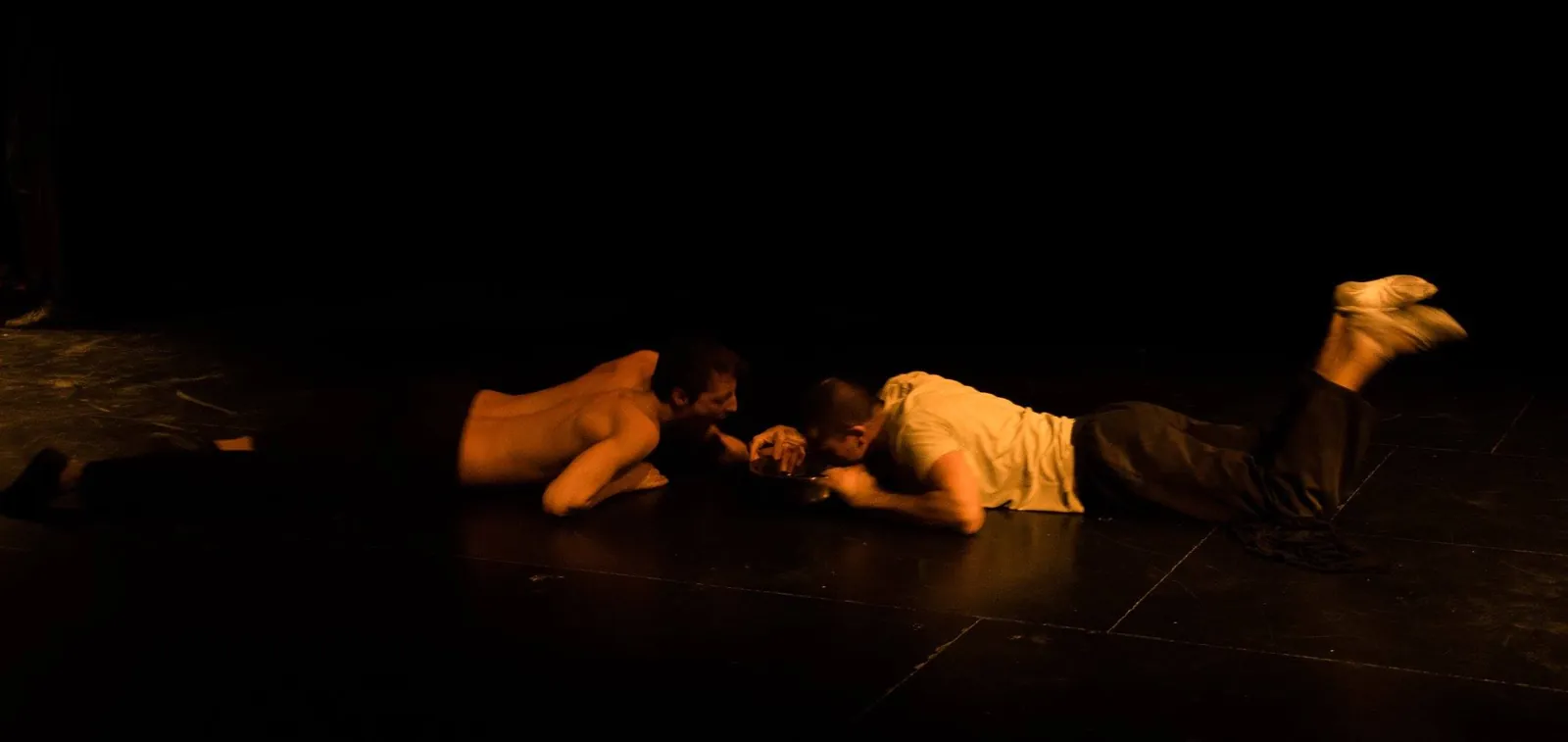
Entre deux mondes: two dancers on the floor, amber light.

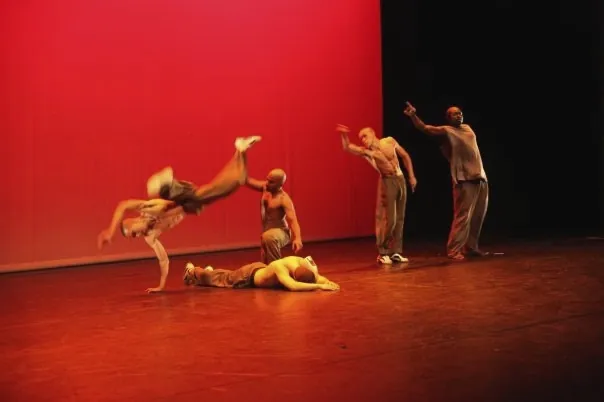
The choreographic themes are inspired by the one Didier Mayemba considers our mother, the Earth, and by what is able to give life and death. In it he singles out Man, the Animal, the Sky, the Sea. He likes to observe and to translate human behaviour, news both momentous and trivial, the movements of our planet — what leads and shapes the world of tomorrow.

The grounding of the body in the floor, raised up by the break, and the techniques of bodily vibration tested to the extreme by pop and electro allow him to serve an elegant, natural movement, close to that of the themes that inspire him. The originality and the variety of his choreographic combinations come from his equal use of the space and the energy of contemporary dance and Afro-Cuban dance.

It is a theme very dear to the eye of the choreographer, who at every moment finds himself in a ceaseless back-and-forth between fluidity and rupture, between benevolence and brutality, between calm and the madness of the body. Feeling gentleness makes us fear harshness; living harshness makes us long for gentleness. The better to reveal them, Didier Mayemba stages them: gentleness and harshness turn into strength and fragility, suffering and joy, turmoil and quietude.

These oppositions, at times fragile, at times unsettled, are used as a developer and give form to their inseparable duality. “Entre deux mondes” brings out the precise instant through these two energies, as a black-and-white photograph reveals it through the contrast of the two colours. It lets us see movement and life emerge from opposition, and makes us want these divergences: it offers them to us as kindly, because creative.

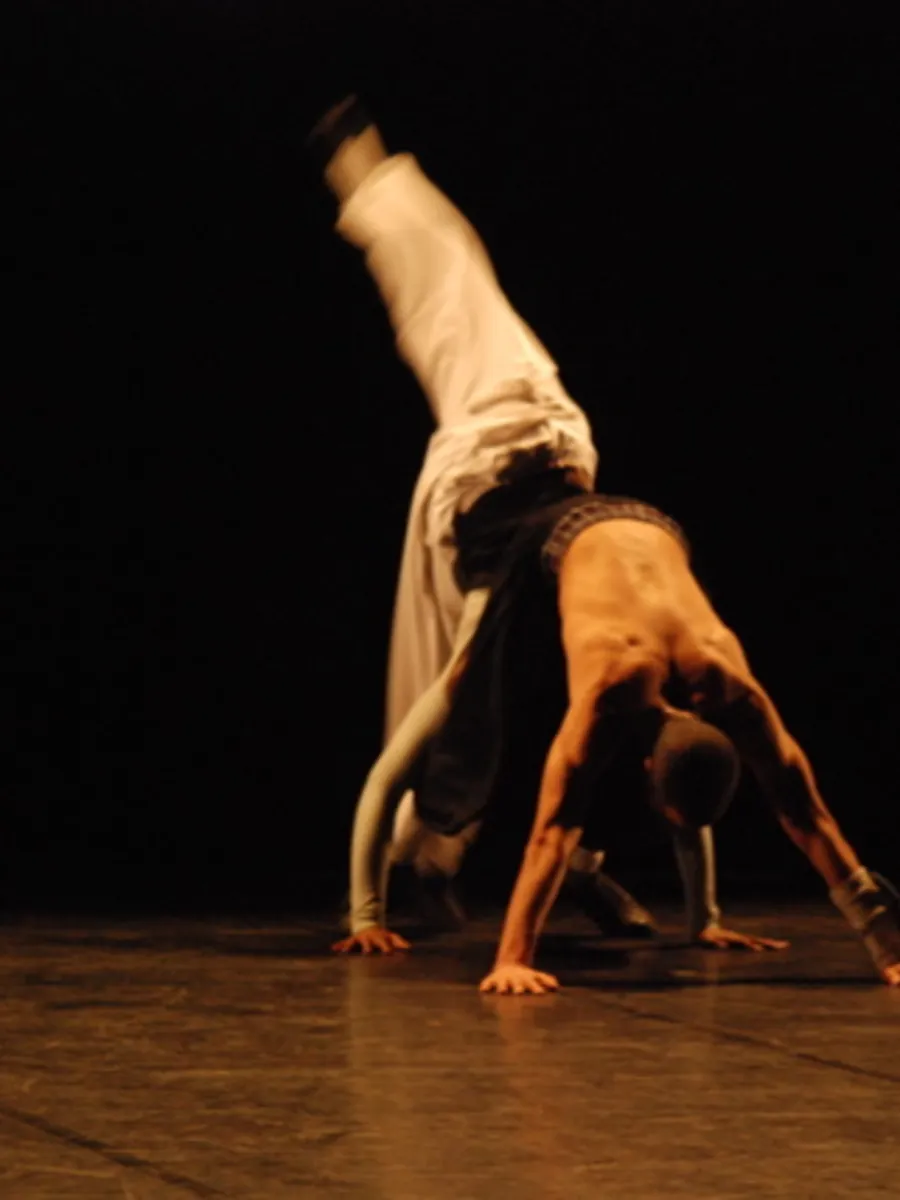
Entre deux mondes: a dancer balanced on his hands, back arched.
Choreography
Didier Mayemba
Form
Group piece
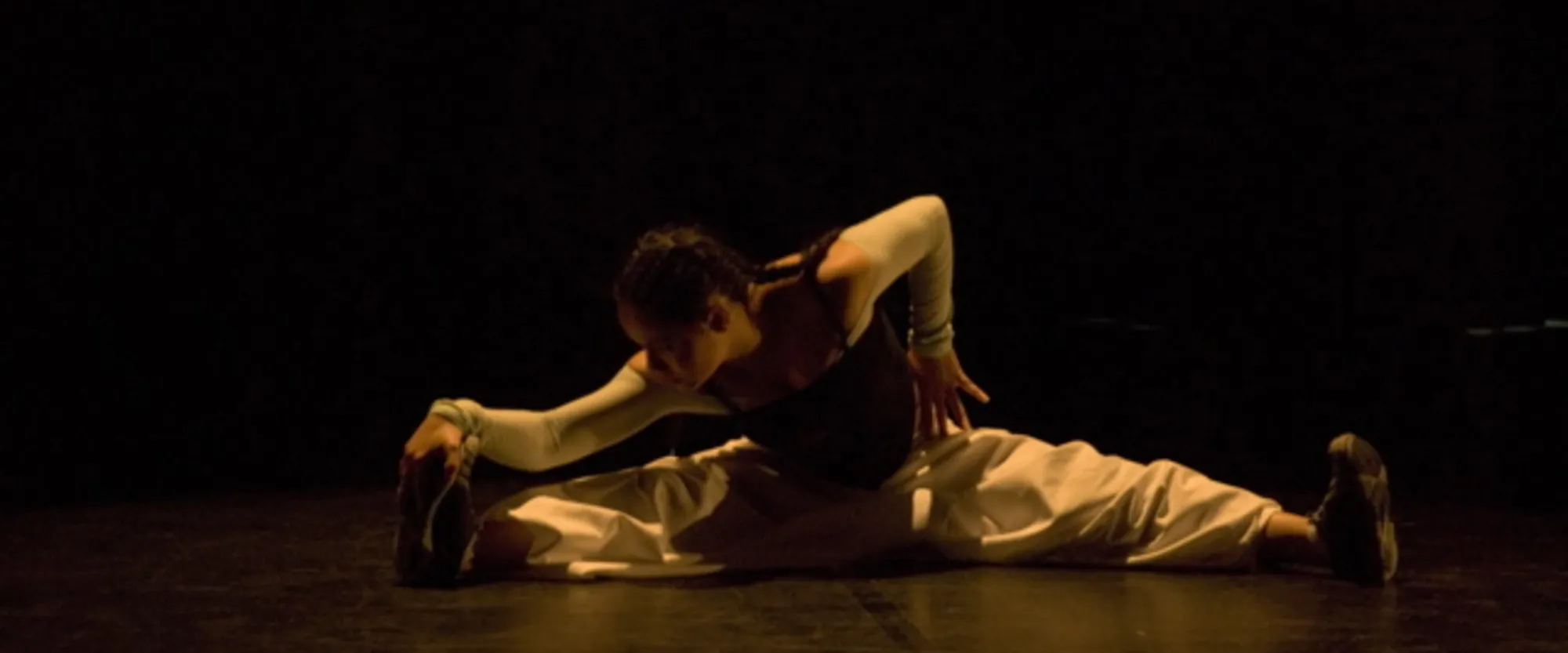
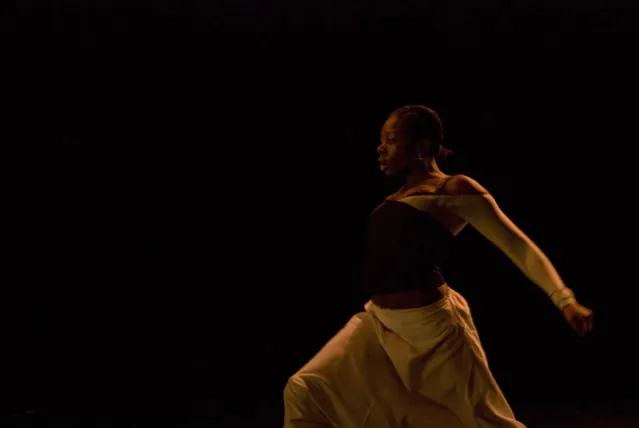
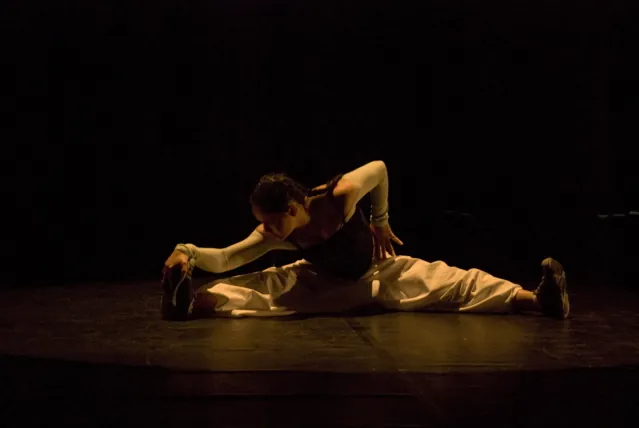
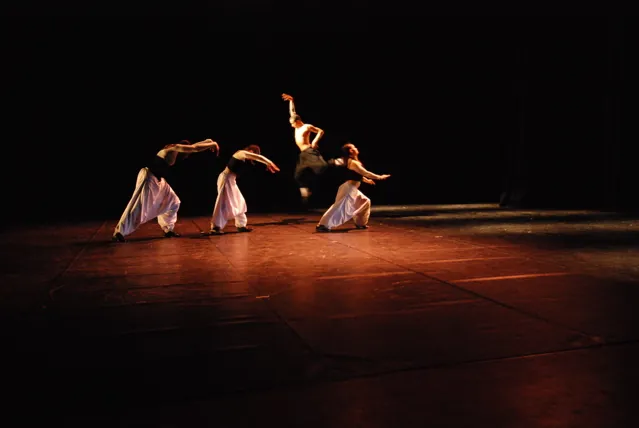
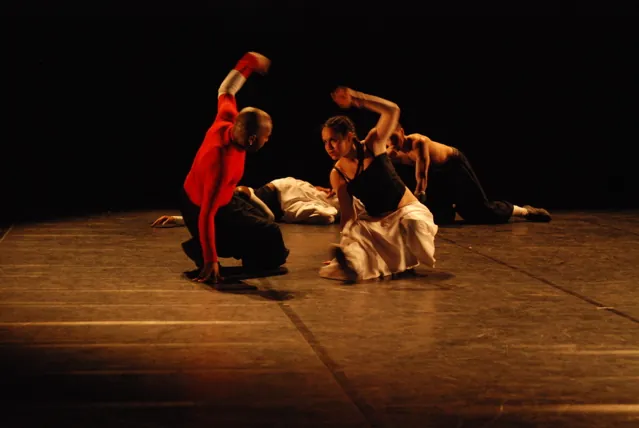
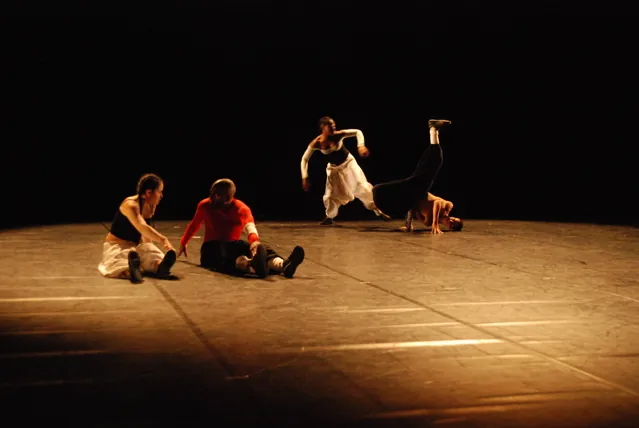
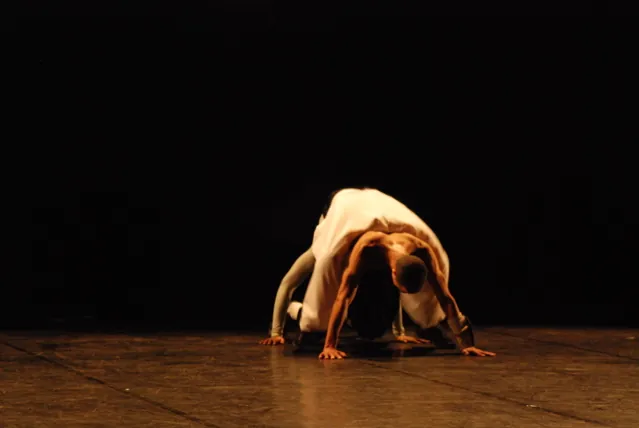
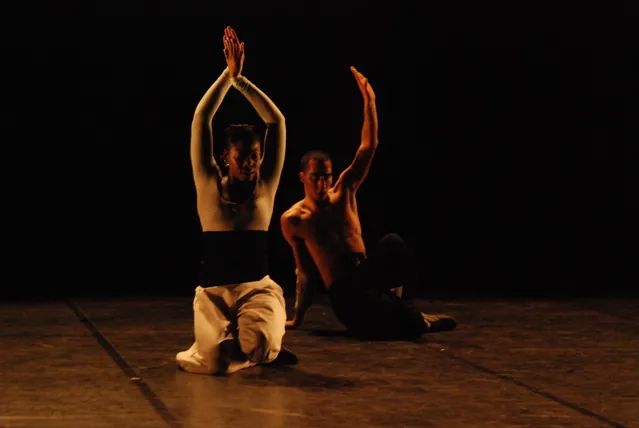
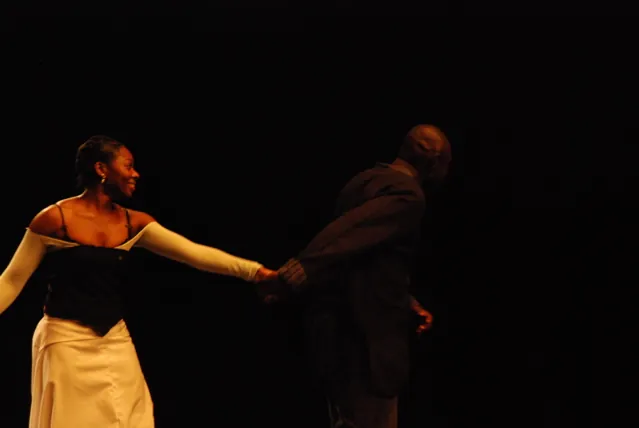
Entre deux mondes: a dancer in a pale skirt, arm outstretched, in darkness. Entre deux mondes: a duo on the floor in a pool of golden light. Entre deux mondes: four dancers leaning over, red and amber light. Entre deux mondes: four dancers on the floor of the stage. Entre deux mondes: three dancers seated and a couple standing. Entre deux mondes: a body folded up, head on the floor, in the halo. Entre deux mondes: two dancers, arms raised and joined. Entre deux mondes: a dancer reaches out a hand to a man in a coat.
04

Pays ronds dans un monde carré

The circle expresses movement and fluidity, the square grounding and stability.

Pays ronds: pyramid of dancers in front of a red backdrop, cast shadows.

We often associate the round with good nature, affability or benevolence, while we lend rigour, authority or rigidity to the square. For the choreographer, the circle expresses movement and fluidity, and the square grounding and stability.

In order to serve his observations on these two concepts and his thinking on the space created by their contrast, Didier Mayemba chooses the language of break and brakka. The break, a free and spontaneous hip-hop dance technique, is largely inspired by the circle and devoted to the floor: it naturally lends its movement to round countries. Whirling dancers transgress the sovereign rules of balance. They turn, and turn, and turn again. The whimsical round of men does not turn so round.

Born of the people, a marriage of joy and revolt, each of these dances voices the urgency of asserting its existence. A paradox between its appearance and its workings, between the visible and the invisible, the Earth, through its rigorous evolution, is “the square”. A dreamlike vision, a danced dream, this work is an escape in which the visual effects that won hip-hop dance its standing are given pride of place.

“Pays ronds dans un monde carré” leaves us free to interpret the small infernal round engaged between round and square.

Pays ronds: silhouette cut out against a large circle of white light.
Choreography
Didier Mayemba
Languages
Break and brakka
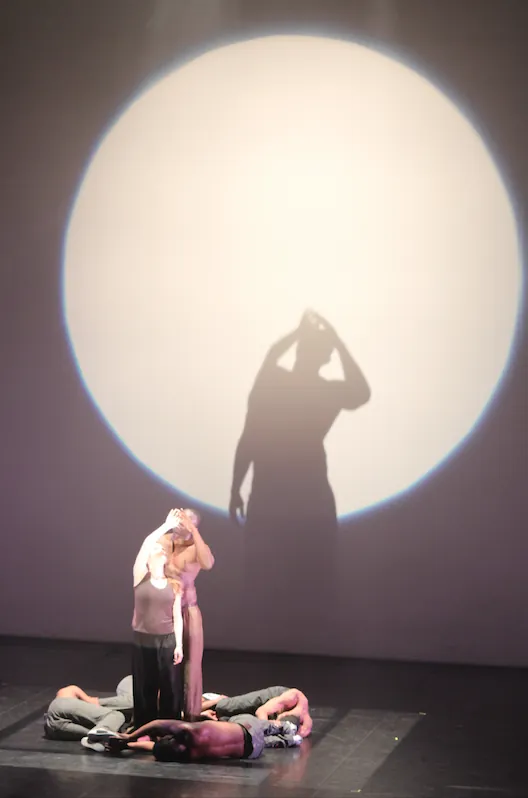
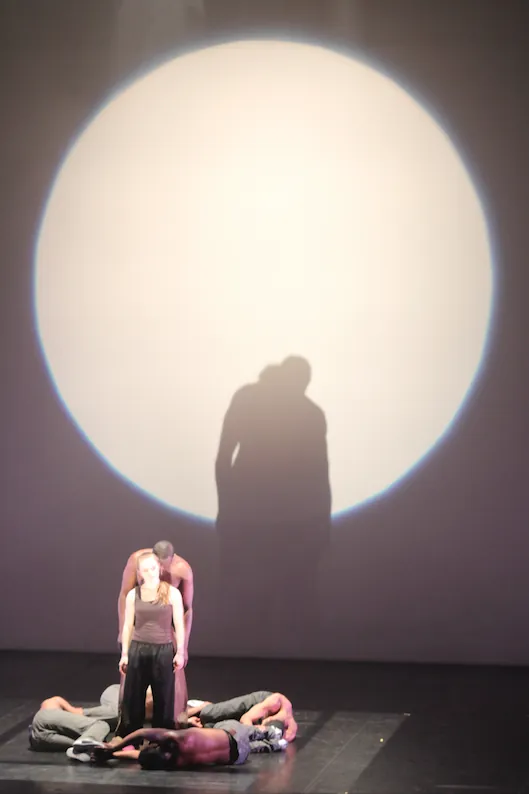
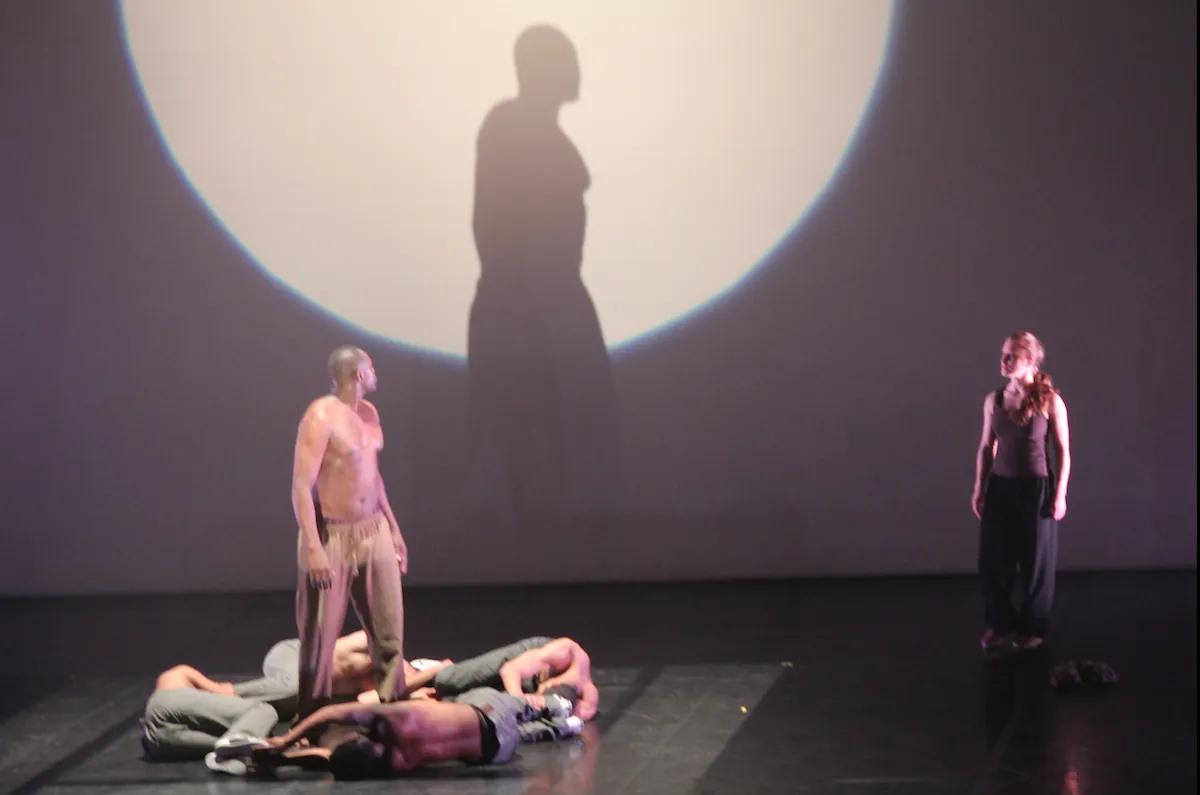
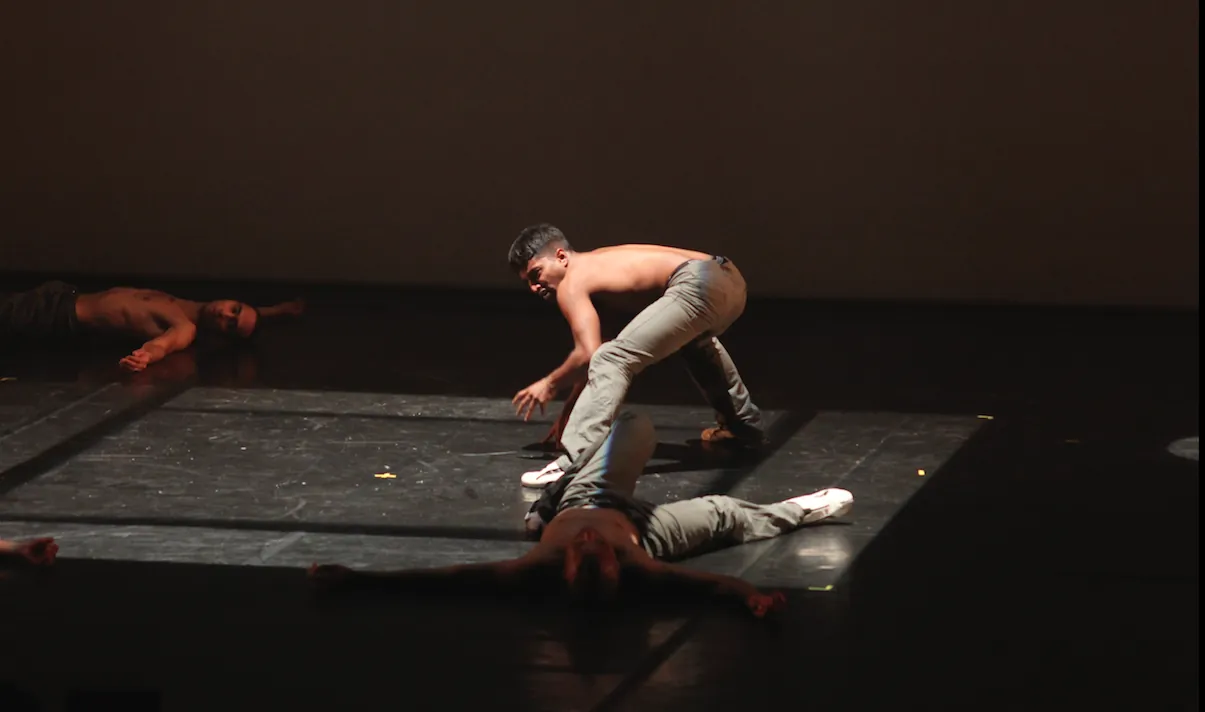
Pays ronds: an immense shadow in the circle of light, dancers on the floor. Pays ronds: one dancer standing in front of the circle, another apart. Pays ronds: compact group and a forest of shadows on the backdrop. Pays ronds: bodies entangled against a magenta background. Pays ronds: a dancer lifted at the top of a group, pink background. Pays ronds: two dancers on the floor on the square of linoleum. Pays ronds: orange light, one dancer standing and two on the floor. Pays ronds: red and orange stage, a lift held in suspension.
05

Sève

A duet on the origins and the movement of the universe.

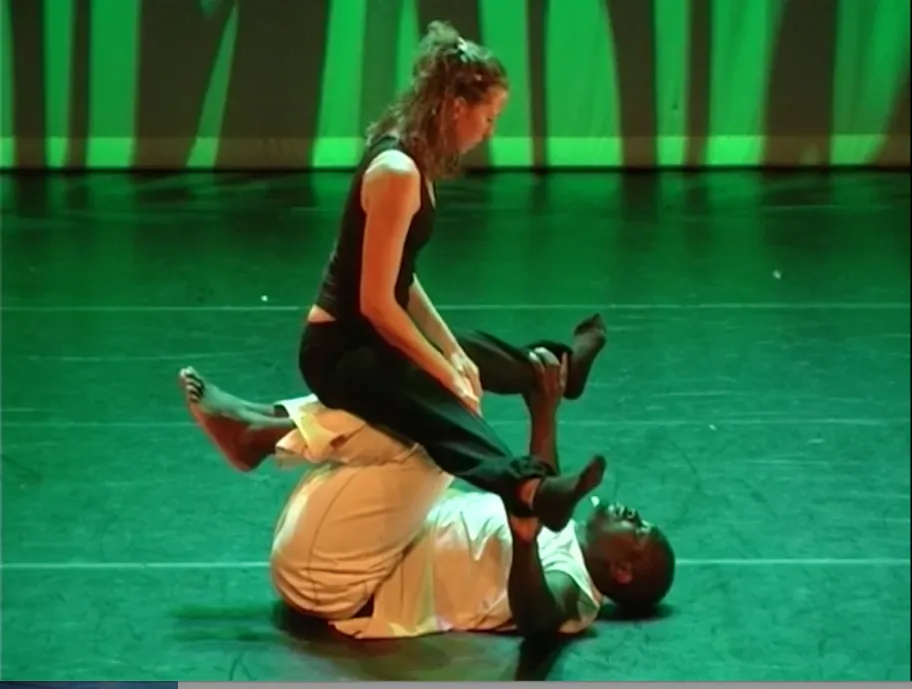
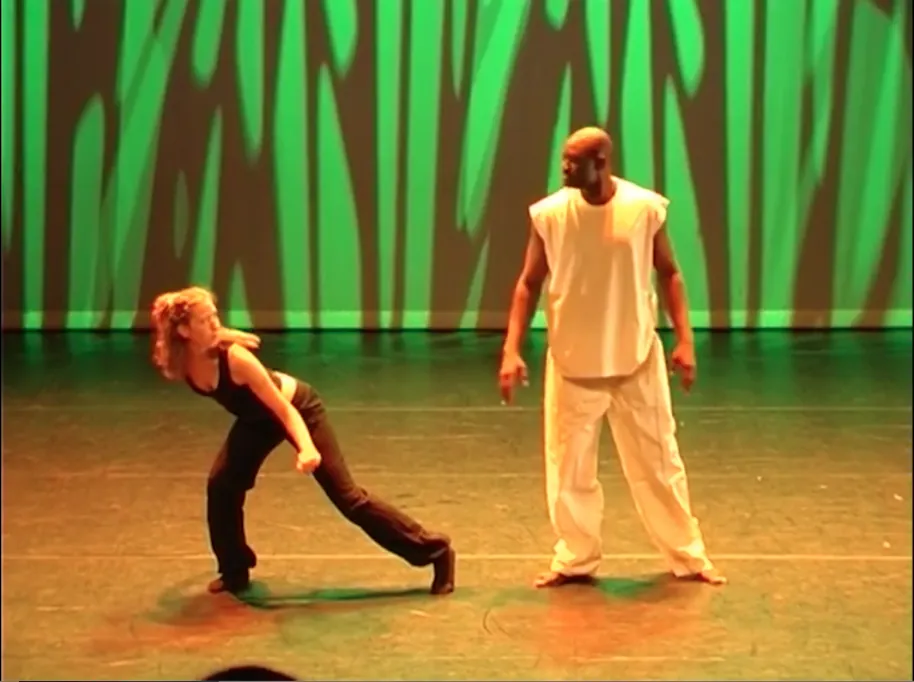
Sève: a duo on the floor in front of a green plant set.

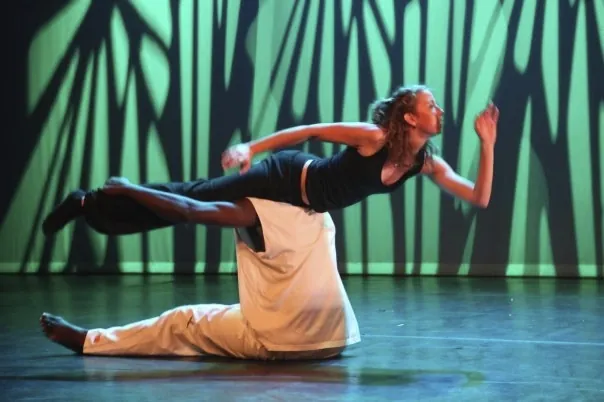
True to his artistic line, Didier Mayemba explores origins, the movement of the universe, sap. He dances the simple, divine and violent communion that exists between a man and a woman, believing themselves alone in the world.

“Sève” is also the phonetics of “saved” in English: save. At the dawn of the 21st century, a modest call to face up to things, to save the planet’s sap, through the human being’s natural predisposition to live.

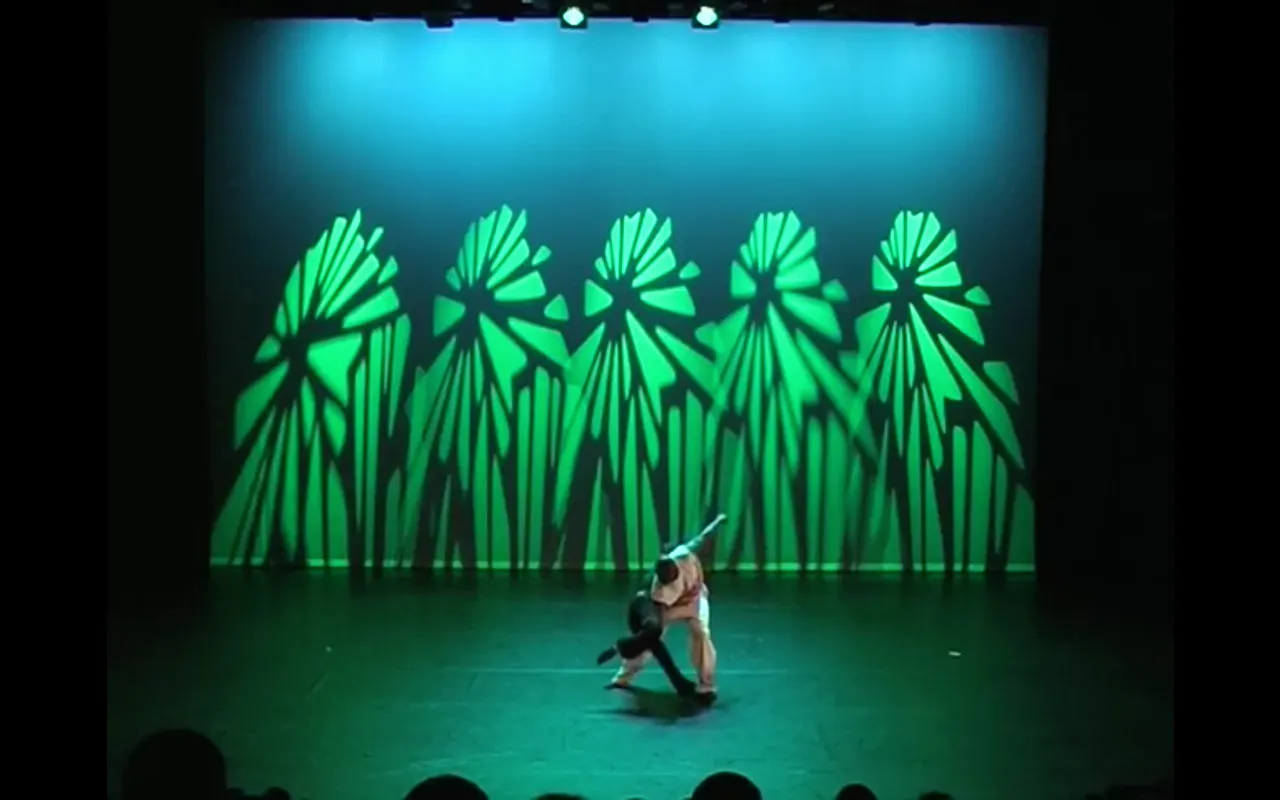
Sève: stage seen from a distance, plant set lit in green and blue.
Choreographers and performers
Alicia Barberis and Didier Mayemba
Music
Didier Mayemba
Production
Esperitu de Danza
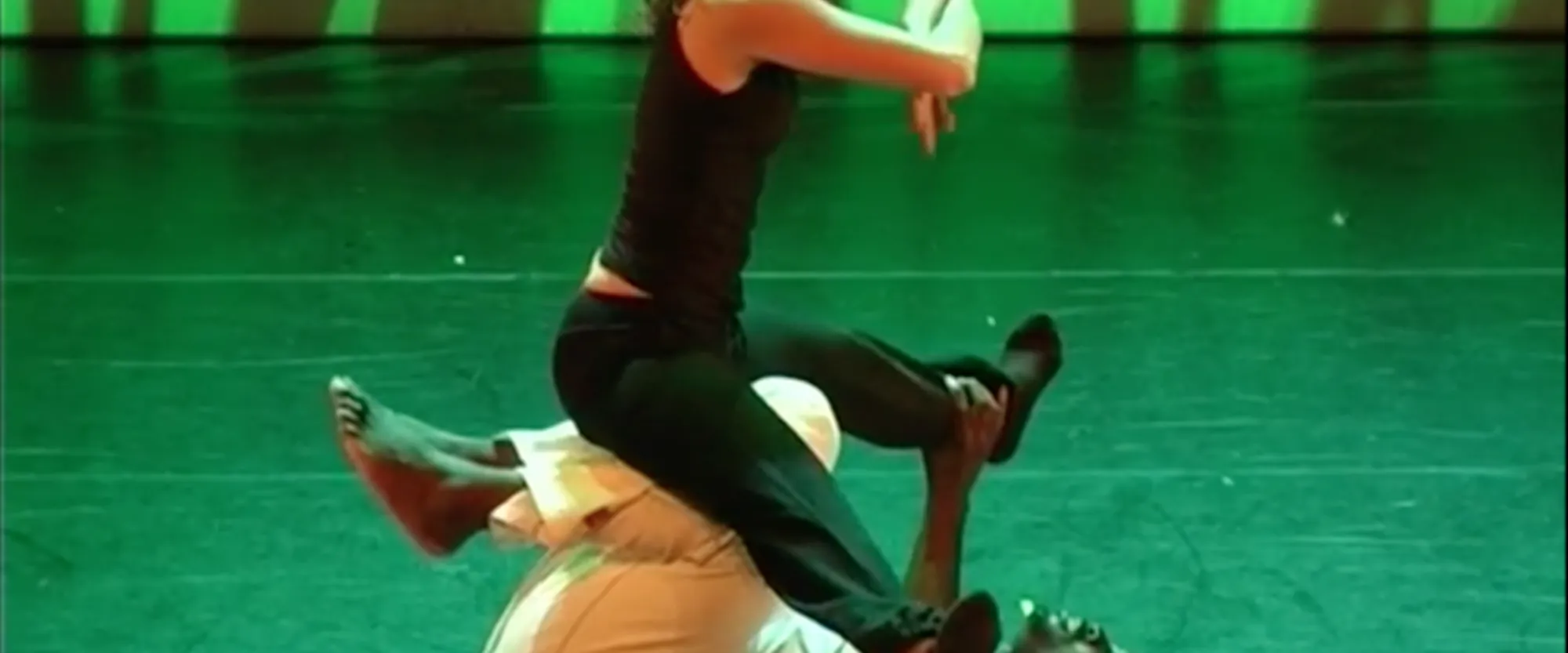
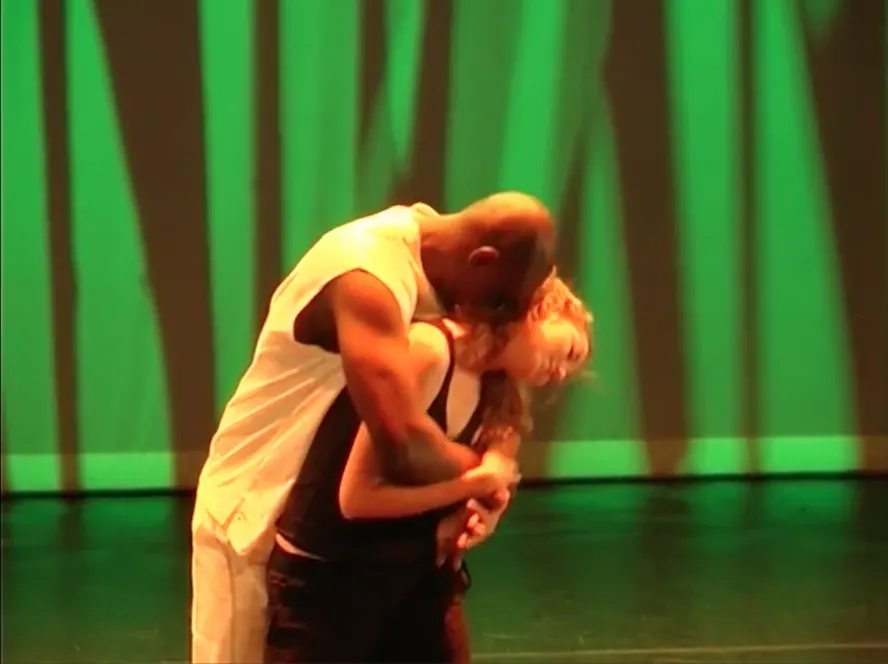
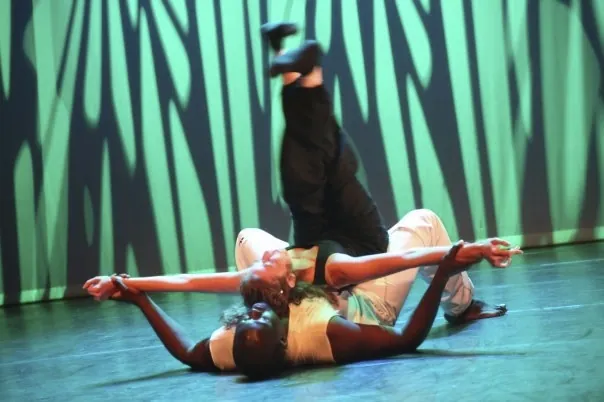
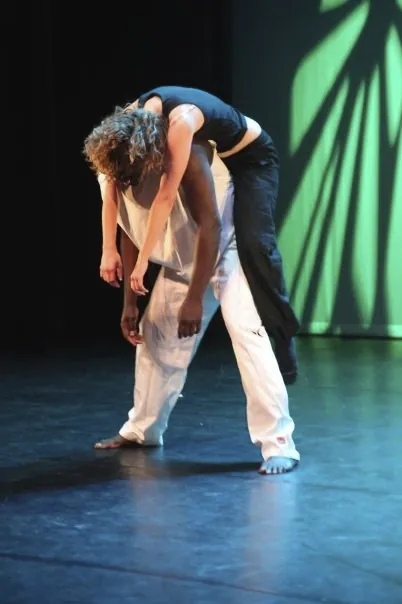
Sève: a dancer supported on a dancer lying down, green background. Sève: two performers at a distance from each other on a green and gold stage. Sève: a close lift, faces near one another, green light. Sève: a duo on the floor in front of the set of plant stems. Sève: a dancer stretching towards an outstretched hand. Sève: two bodies entwined, one carried on the back of the other.
06

Urbain Noël

How is Christmas celebrated at the foot of the tower blocks?

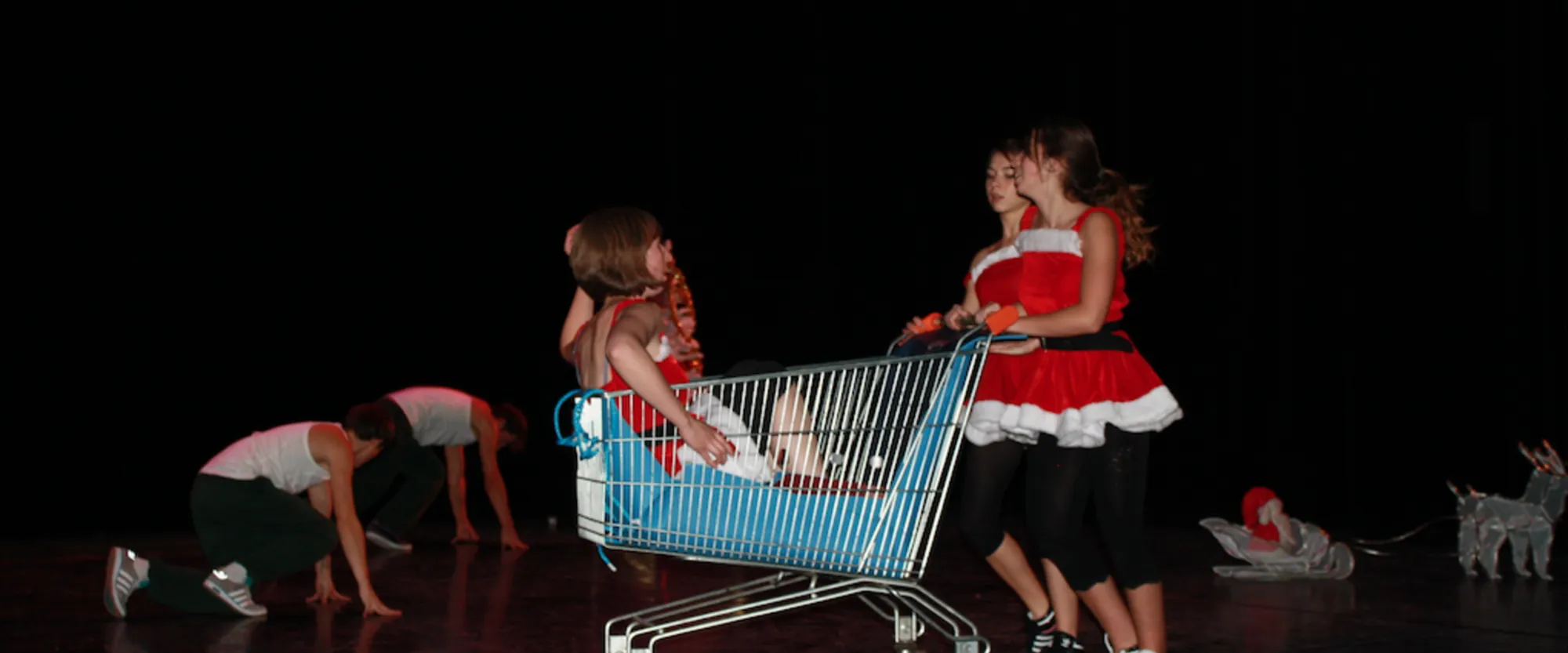
Urbain Noël: dancers push a shopping trolley across the stage, Christmas set.

A hip-hop dance show whose purpose is to blend the magic of Christmas with the joy that lives in the neighbourhoods at that time of year.

It depicts the choreographer’s childhood memories, along with all the magic that the month of December brings to local people. That month has the gift of setting everyday worries aside: residents, young and old, gather in the community centres or the social centres, all driven by a single aim — to bring happiness to those close to them. Every parent, every person finds their childlike soul again on Christmas Eve.

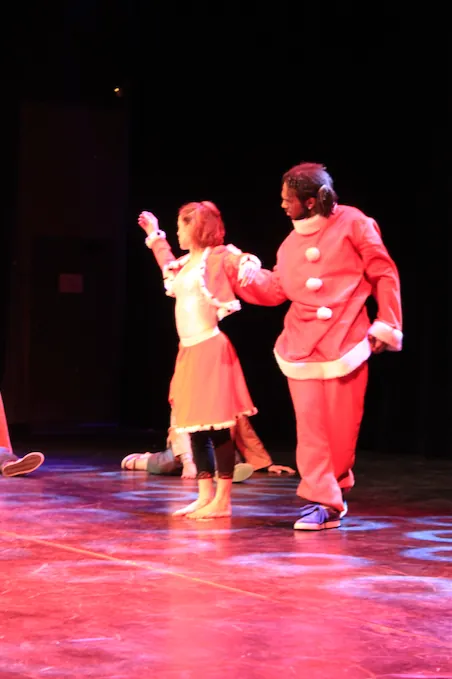
Urbain Noël: two performers in costume on a stage lit in pink.
Choreography
Didier Mayemba
Audience
All audiences, from childhood upwards
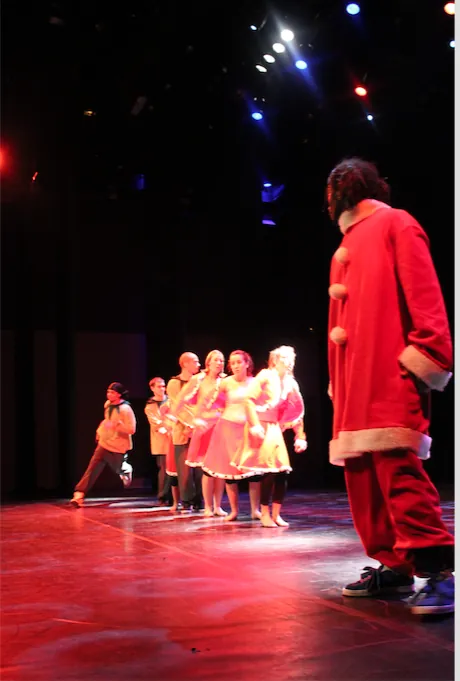
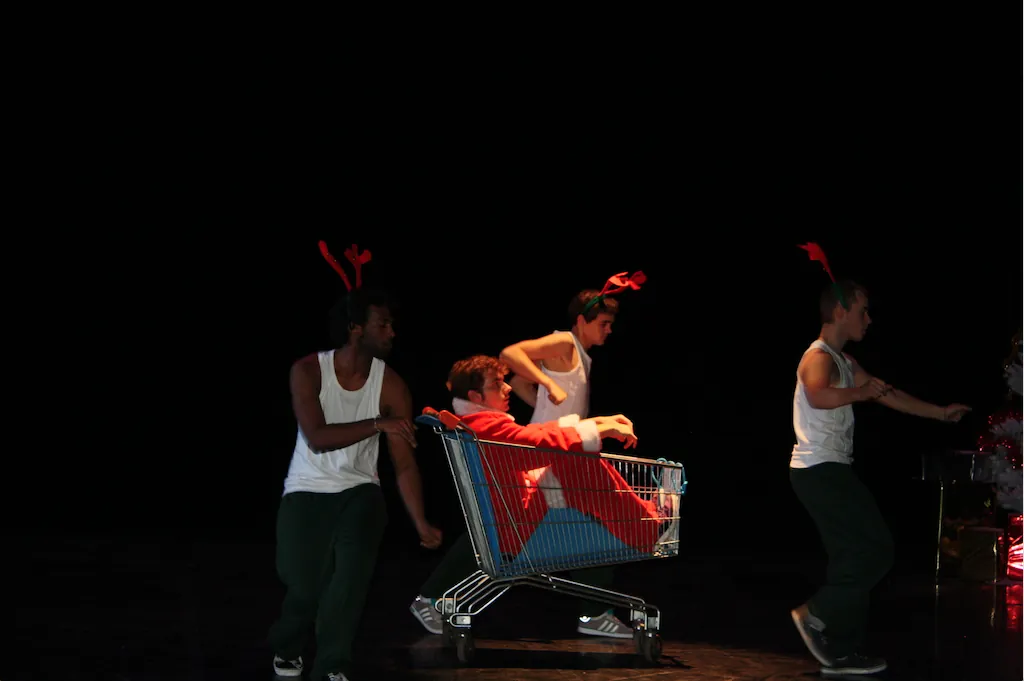
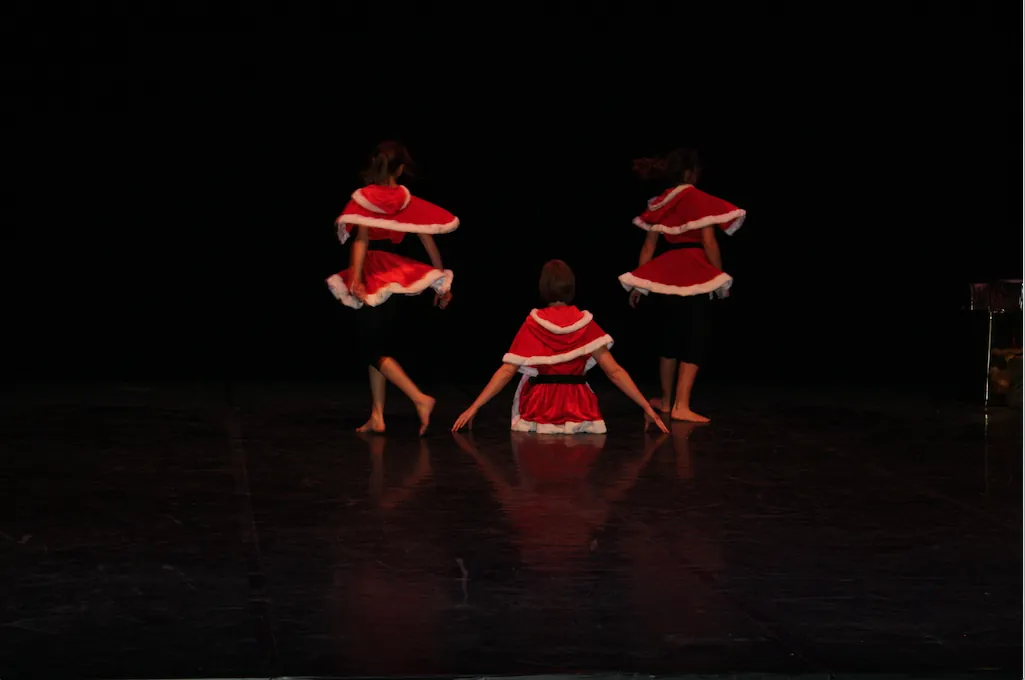
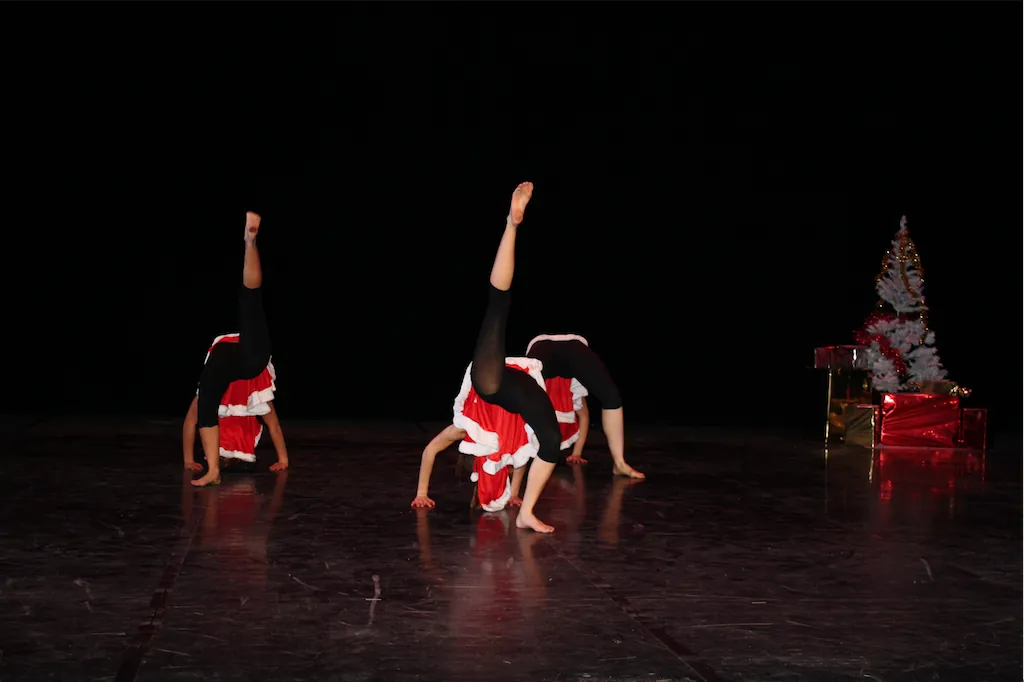
Urbain Noël: a group of children on stage and a character in a red costume. Urbain Noël: dancers around a shopping trolley, red hats. Urbain Noël: three dancers in costume on the dark stage. Urbain Noël: a dancer balancing near the Christmas tree.

Presenting one of these pieces

Artistic packs, technical specifications, running times and booking conditions on request.

Write to the company